news
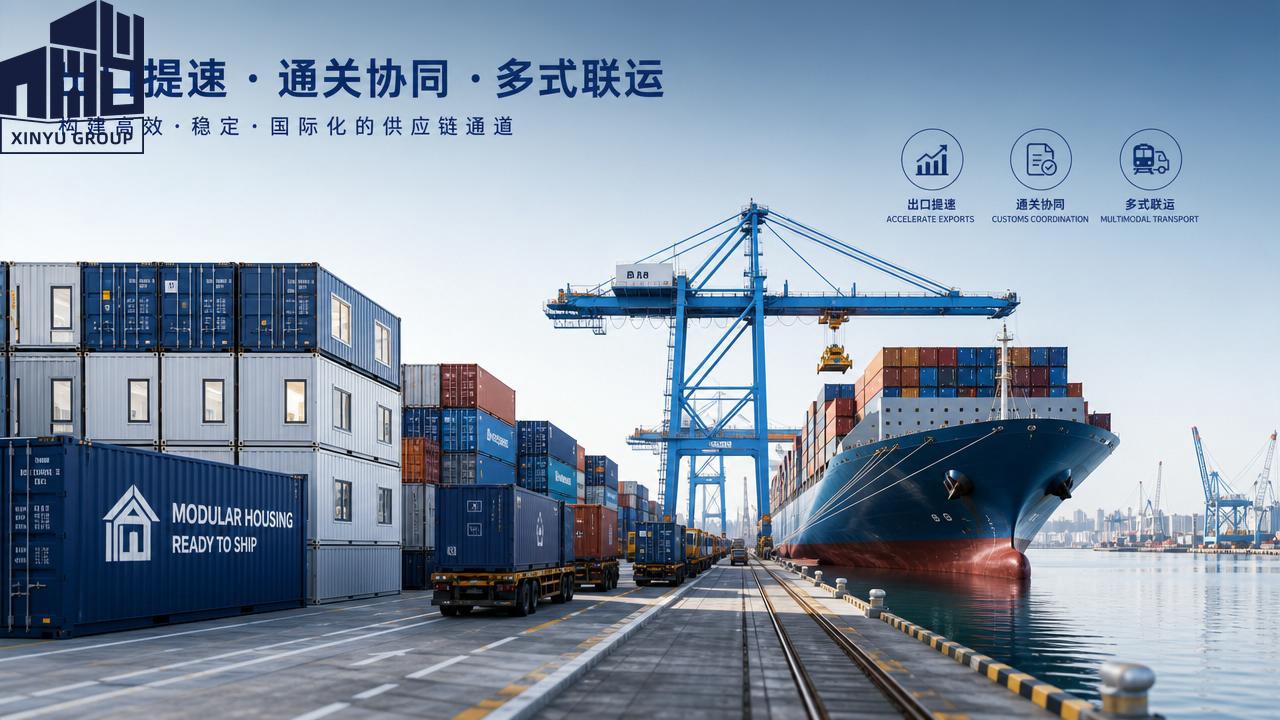
On June 14, 2026, a joint cross-border trade facilitation initiative announced by the General Administration of Customs and 24 departments moved into full implementation across 45 cities, sending a practical signal to exporters of container houses and other modular building products. The key change is not only faster customs handling, but a more integrated supervision and transport-document workflow that can affect export scheduling, consolidation compliance, inland-to-port coordination, and delivery visibility for suppliers, logistics providers, and overseas buyers.
What has been confirmed in this rollout
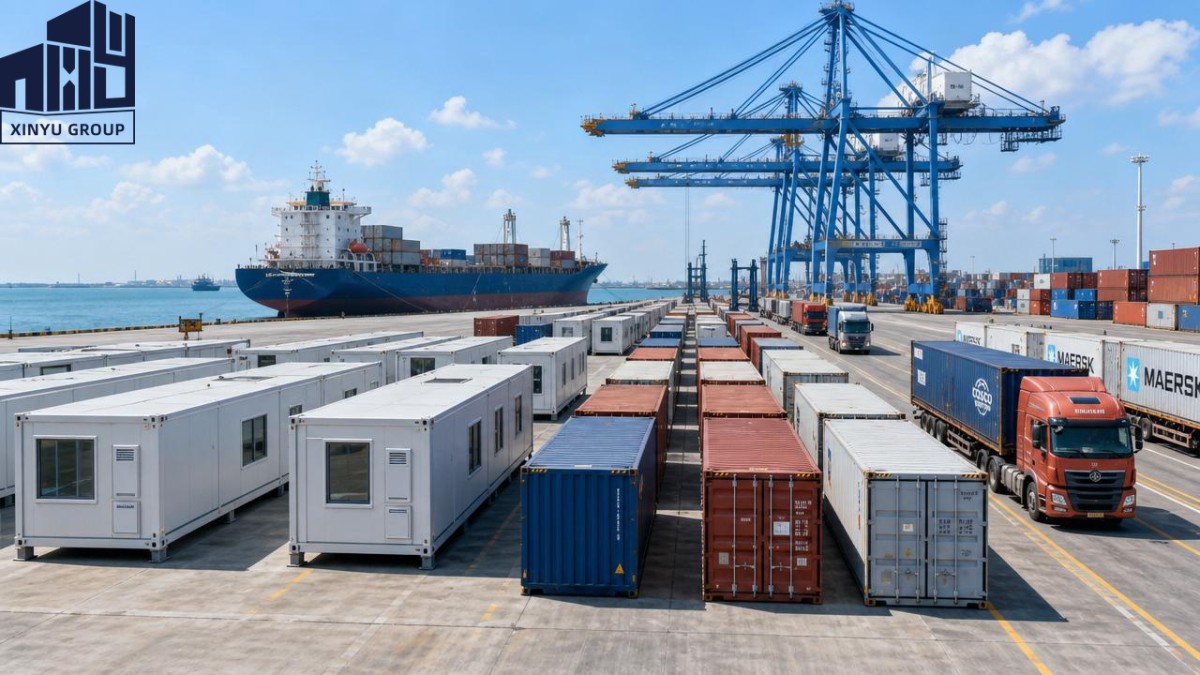
The confirmed information is that the special action on cross-border trade facilitation was fully implemented in 45 cities on June 14, 2026. According to the provided event summary, the measures were jointly announced by the General Administration of Customs and 24 departments. Two mechanisms are highlighted in particular: integrated supervision between port and inland locations, and a multimodal transport model described as a single-document-through process. Based on the provided information, these arrangements have significantly reduced export customs clearance and cargo gathering time for container houses and other modular construction products, with export clearance efficiency for container houses improving by 30%.
The same summary also states that, for overseas importers, the change makes order delivery cycles more predictable, strengthens compliance in both less-than-container-load and full-container-load export arrangements, and stabilizes inspection resource allocation for non-hazardous container houses after higher-priority cargo such as agricultural food products and pharmaceuticals is given precedence.
Where the operational impact is likely to appear
Exporters may see the biggest change in shipment planning
From an industry perspective, exporters of container houses and related modular products are likely to feel the impact first because the confirmed change directly concerns customs clearance and port-entry timing. The main business effects are likely to appear in booking coordination, cargo handover, consolidation arrangements, and delivery date commitments to overseas customers. What deserves closer attention is whether internal export documentation, cargo classification, and shipment files are organized well enough to match a faster and more integrated customs process.
Overseas buyers gain more predictable delivery windows
Analysis shows that importers are affected less by the policy text itself than by the execution rhythm it creates. If inland supervision and port handling are better linked, overseas buyers may be able to plan receiving schedules, project installation timing, and inventory preparation with fewer timing fluctuations. They should still pay attention to contract wording, shipment milestones, and document consistency, because better predictability only works in practice when seller-side export files and transport arrangements remain aligned.
Logistics and consolidation service providers face tighter document discipline
Observably, the reference to a single-document-through multimodal model points to stronger coordination requirements for freight forwarders, consolidators, and other supply chain service providers. The likely impact is not simply faster movement, but a greater need for consistency across transport documents, customs data, and cargo transfer records. For LCL and FCL business alike, the compliance benefit mentioned in the event summary suggests that document accuracy and handoff discipline may become more important in day-to-day execution.
Manufacturers and project suppliers need closer delivery-to-compliance alignment
For manufacturers and project-based suppliers, the relevance lies in the link between factory completion, inland dispatch, port arrival, and export release. Analysis shows that a shorter customs and port-gathering cycle can improve delivery control only if technical files, packing information, and shipment readiness are synchronized earlier. In practical terms, production and export teams may need to review how quickly they can turn completed goods into customs-ready cargo under a faster operating window.
What companies should watch as execution develops
Check whether existing export files can support a faster workflow
It is more appropriate to understand the current development as an execution signal rather than a fully detailed operating manual. Companies should therefore review whether their customs declarations, packing lists, cargo descriptions, and transport documentation are prepared in a way that avoids delays once port and inland procedures become more tightly connected.
Monitor how LCL and FCL compliance is handled in practice
The event summary specifically points to stronger compliance for both consolidated and full-container exports. What deserves closer attention is how this is reflected in actual filing requirements, cargo matching discipline, and shipment coordination standards during implementation. Businesses relying on mixed cargo or multi-stop handoffs should watch for any evolving operational expectations.
Reassess delivery promises made to overseas customers
Analysis shows that more predictable export timing can improve customer communication, but companies should avoid treating the headline improvement as a universal outcome for every shipment. A practical response is to review delivery lead-time commitments, buffer assumptions, and supplier coordination rules without assuming that every port, route, or shipment profile will perform identically.
Follow later clarifications from authorities and market documents
Because the provided information does not include detailed implementation rules, companies should continue watching for later official wording, execution guidance, procurement document updates, and changes in customer tender requirements. This is especially relevant where delivery timing, document traceability, or supply chain accountability forms part of project evaluation or contract performance.
Why this looks more like an execution signal than a finished rulebook
Observably, the importance of this development lies in its operational direction: it suggests that trade facilitation for container house exports is moving from general policy intent into broader on-the-ground application. At the same time, the currently confirmed facts remain limited to the rollout scope, the participating authorities, the highlighted mechanisms, and the stated efficiency effect. Analysis shows that the market still needs to observe how consistently these arrangements are applied across actual export flows, how documentation expectations are interpreted, and whether downstream procurement and compliance practices begin to adjust.
How the market may best read this development for now
From an industry perspective, this update is best read as a concrete implementation signal with immediate relevance to export operations, rather than as a final and fully settled compliance framework. The reported improvement in customs timing matters because it can influence scheduling reliability, shipment organization, and buyer expectations for container houses and other modular building products. A cautious reading remains appropriate: the direction is clear, but the full business effect will depend on how execution details, documentation practice, and market feedback evolve after rollout.
Basis of this article and what still needs verification
This article is generated from the user-provided news title, event date, and event summary. For developments of this type, commonly relevant source categories include official announcements, releases from regulatory authorities, customs or trade administration updates, industry association information, standard-setting documents, and reporting by authoritative media. No specific official source link was provided in the input, so the exact official link remains to be verified. Further follow-up should focus on implementation details, compliance interpretation, tender document changes, market feedback, and how companies actually apply the new arrangements in export operations.
Need Us to
Contact You?
We received your message and will contact you as soon as possible.
Thank you for your visit.