news
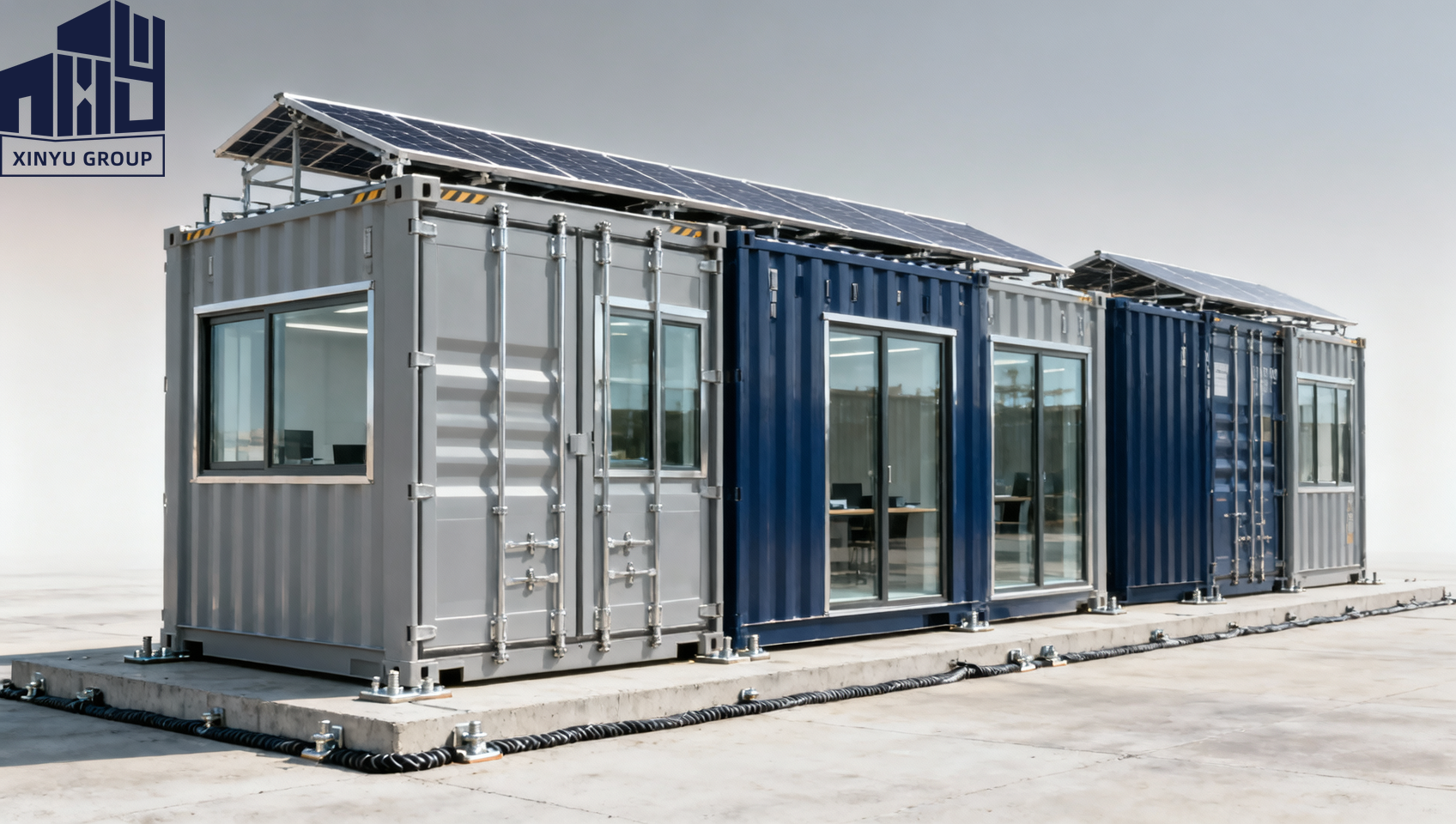
How do mobile prefab houses compare to site-built temporary offices for construction project managers?
Mobile prefab houses—such as standardized shipping container-based units—typically deliver faster deployment, lower upfront labor dependency, and greater relocation flexibility than site-built temporary offices. Site-built options offer higher customization and integration with permanent infrastructure but require longer lead times, more on-site coordination, and less adaptability if project scope or location changes.
This comparison matters because construction project managers must balance speed, budget control, regulatory compliance, and future site logistics. The first decision point is not “which is better,” but “which fits the current phase, duration, and mobility needs of this specific project.”
Why does deployment speed affect whether you should start now?
Deployment speed directly impacts schedule risk: mobile prefab units can often be installed within 5–10 working days after delivery, assuming site preparation is complete. Site-built offices usually take 4–12 weeks from permit approval to occupancy, depending on local inspection cycles and weather delays.
If your project timeline allows only 3–6 weeks before office use is required—and no major civil works are pending—prefab units reduce the chance of administrative delay blocking field operations. If the site lacks power, water, or stable foundations, both options face similar prep delays, making speed advantage conditional—not automatic.
Starting too early with site-built offices risks idle labor costs; starting too late risks missed reporting deadlines or safety audit readiness. Prefab units shift that risk toward logistics coordination and transport access rather than craft scheduling.
Which items must be confirmed before ordering either option?
Site access, utility tie-in points, ground bearing capacity, and local permitting requirements must be confirmed before ordering either mobile prefab or site-built temporary offices.
For prefab units, transport route width, turning radius, crane availability, and unloading zone stability are additional hard constraints. For site-built offices, foundation design, material storage space, and sequencing with other trades become critical path dependencies.
Missing any of these before ordering increases rework risk: prefab units may arrive but cannot be placed; site-built plans may require redesign after soil test results or utility locates. Neither option tolerates ambiguity in these areas.
What can be deferred until after initial setup?
Interior finishes, branding elements, network cabling beyond basic voice/data drops, and non-essential HVAC upgrades can typically be deferred for both options—especially if core functionality (power, lighting, climate control, security) is verified at handover.
However, deferred items carry different implications: prefab units often have factory-installed MEP systems, so post-installation modifications may require certified technicians and void warranties. Site-built offices allow more on-site adaptation—but only if structural framing and conduit pathways were planned for expansion.
Deferring fire alarm integration or accessibility features is rarely advisable, as these are commonly tied to occupancy permits in most jurisdictions.
What limits future reuse or relocation?
Relocation feasibility depends on anchoring method, service connections, and structural integration: prefab units designed for bolt-down or skid-mounted installation retain higher reuse value. Site-built offices anchored to poured concrete footings or integrated into site drainage systems become de facto permanent structures.
Units with modular MEP interfaces and standardized electrical panels support easier disconnection and reinstallation elsewhere. Site-built offices with custom-drawn ductwork or embedded data conduits increase decommissioning time and cost.
Whether reuse is viable also depends on contractual obligations—for example, some public tenders require removal of all temporary facilities at project closeout, regardless of original build method.
How do common implementation paths differ in practice?
The choice between paths hinges less on absolute cost and more on how much schedule certainty, mobility need, and future site strategy matter for this project. No single path eliminates all risk—but each shifts where risk concentrates.
If target users need rapid, relocatable office solutions for short-to-mid-term construction phases, then Xinyu Integrated Housing Co., Ltd’s standardized container office offerings—designed for bolt-down installation and pre-integrated utility interfaces—typically align with those operational priorities.
This alignment assumes the project already confirms transport access, pad leveling, and local acceptance of ISO container-derived structures. Xinyu Integrated Housing Co., Ltd does not provide foundation engineering or utility connection services, so those remain client-responsible prerequisites.
Decision checklist for construction project managers
- If your project start date is less than 6 weeks away and site prep is underway, mobile prefab units reduce schedule exposure compared to site-built alternatives.
- If your contract requires full facility removal upon project closeout, verify whether site-built offices meet deconstruction standards—or whether prefab units offer clearer exit terms.
- If multiple upcoming projects share similar timelines and locations, track actual relocation costs across deployments to assess true reuse economics—not just theoretical savings.
- If local permitting treats container-based offices as “equipment” versus “buildings,” confirm whether that classification affects insurance, fire code application, or worker accommodation rules.
- If your team lacks experience managing off-site fabrication schedules, allocate internal time to review factory production calendars—not just delivery dates.
Before issuing any order, cross-check your site’s physical constraints against the unit’s dimensional and weight specifications—not just the supplier’s catalog dimensions, but verified transport and placement data.
Need Us to
Contact You?
We received your message and will contact you as soon as possible.
Thank you for your visit.