news

The EU Council has formally adopted a new rule that takes effect on July 1, 2026, applying a flat €3 duty by product category to imported parcels valued at €150 or below when they are sent directly to consumers. For container house accessories such as locks, LED light sets, and smart controllers, the change matters because it targets the low-value parcel model often used for sample orders, after-sales replenishment, and small-batch direct shipping into Europe. For industry participants, the issue is not only the added charge itself, but also the pressure it may place on customs costs, retail pricing, and the viability of B2B2C fulfillment routes that rely on frequent small shipments.
What the New Rule Confirms
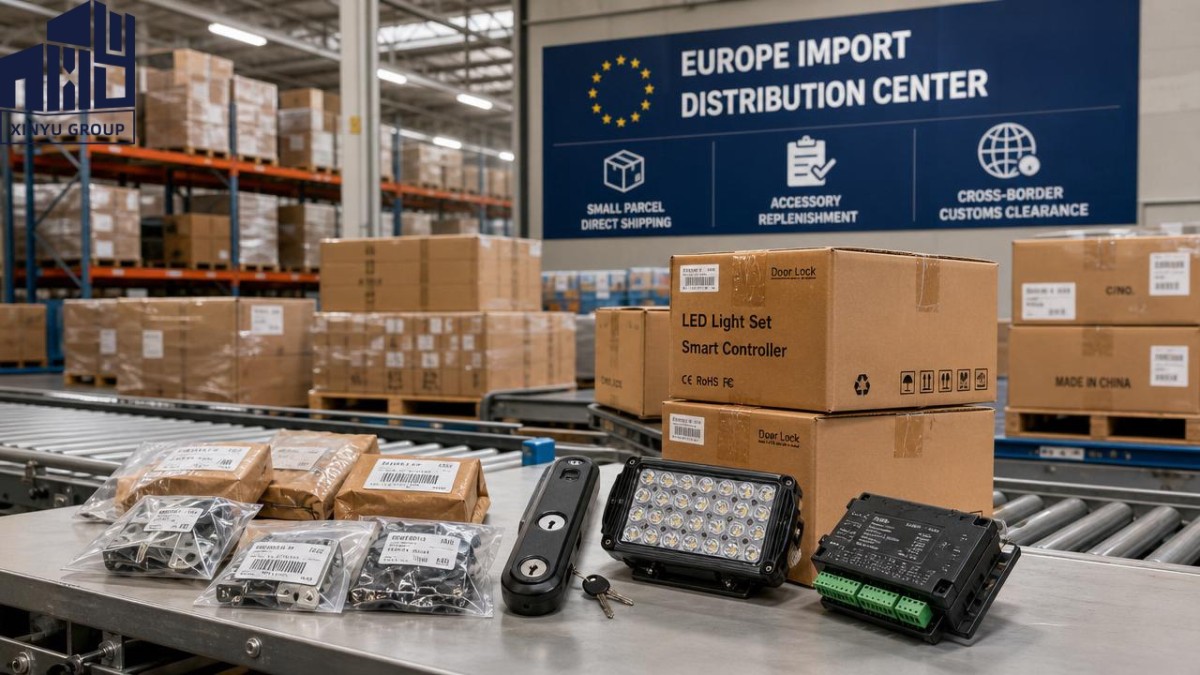
According to the information provided, the new EU measure was formally approved by the EU Council and will come into force on July 1, 2026. It applies to imported small parcels with a declared value of no more than €150 that are delivered directly to consumers. The rule covers low-value accessories including container house locks, LED lighting kits, and smart control units, and imposes a uniform fixed duty of €3 by product category on these shipments.
The information provided also indicates that the policy is expected to raise customs clearance costs and end pricing for European small and medium-sized distributors as well as DIY channels. It is described as having a particular impact on B2B2C models that depend on direct parcel shipping for trial orders, sample purchases, and after-sales restocking.
Where the Pressure May Appear First
Small distributors and DIY channels face immediate cost sensitivity
From an industry perspective, these market participants may feel the effect first because low-value direct-to-consumer parcels are often used to keep inventory light and ordering flexible. The main pressure point is likely to be the combination of higher clearance-related costs and the need to revisit final selling prices on small-ticket accessory orders.
Direct-shipping sellers may need to reassess order structure
Analysis shows that businesses using small parcels for test orders, sample dispatches, or fragmented replenishment could face a more difficult economics model once a fixed duty is attached to each qualifying shipment. What deserves closer attention is whether the added charge changes the practicality of sending multiple low-value accessory orders separately rather than consolidating them through other channels.
Accessory suppliers linked to container housing may see channel friction
For suppliers of locks, LED modules, and smart controllers used in container house applications, the impact may not appear in production first, but in channel movement and order behavior. Observably, the key business link to watch is whether European buyers become more cautious with direct parcel replenishment and small-volume sourcing for maintenance or customization needs.
Supply chain service providers may face new communication demands
Service providers involved in cross-border fulfillment, customs handling, or order coordination may need to pay closer attention to how shipments are classified and communicated to clients. The likely impact is operational rather than strategic at first, especially in explaining landed-cost changes and shipment suitability for low-value direct delivery.
What Companies Should Watch Before the Rule Takes Effect
Monitor how the rule is expressed in practical implementation
What deserves closer attention is the difference between the policy signal and day-to-day execution. Companies should continue tracking how the fixed-duty approach is described in official wording and how it is applied to relevant low-value accessory categories in actual shipment scenarios.
Review which product lines rely on parcel-based fulfillment
Businesses should identify which container house accessory items are most exposed to direct-to-consumer parcel shipping under the €150 threshold. This is especially relevant for product lines used in sample procurement, after-sales replacement, or low-volume trial demand, where the added duty may have a disproportionate effect on order economics.
Prepare documentation and customer communication in advance
Analysis shows that even a relatively simple fixed-duty rule can create friction if suppliers, distributors, and service partners are not aligned on shipment terms, cost presentation, and delivery expectations. Companies may need to review order documents, customs-related information, and customer-facing pricing communication well before July 2026.
Check whether replenishment and service workflows need adjustment
For businesses that support European customers through frequent accessory resupply, the practical question is whether current after-sales and replenishment routines still work efficiently under the new cost structure. Observably, the business focus should be on delivery rhythm, parcel frequency, and contingency planning rather than on broad strategic statements.
Why This Looks Like More Than a Short-Term Cost Issue
Analysis shows that this development is better understood as a structural signal for cross-border low-value parcel trade into Europe rather than as a one-off operating detail. The confirmed effective date gives businesses a clear timeline, but the broader industry relevance lies in how direct-shipping models for low-value accessories may be reassessed once fixed duties become part of routine order costing.
At the same time, it is more appropriate to understand this as an active area for continued observation rather than a fully settled market outcome. The information provided confirms the rule and its likely pressure points, but the exact commercial response across distributors, DIY channels, and service providers will still depend on how businesses adapt their shipment and pricing practices.
How the Market May Need to Read This Change
For the container house accessory trade, the immediate significance of this measure is its likely effect on low-value direct parcel imports, especially where business models depend on flexible, frequent, and small-batch cross-border delivery. The rule does not automatically determine a single market outcome, but it does introduce a clearer cost threshold that businesses can no longer ignore.
Current observation suggests this should be read as a confirmed policy change with broader operational implications, especially for B2B2C flows tied to samples, trial orders, and after-sales replenishment. A measured interpretation is more appropriate than an exaggerated one: the issue is not that all direct shipping becomes unworkable, but that cost control, order design, and channel selection may require closer review.
Basis of This Article
This article is based on the user-provided news title, effective date, and event summary concerning the EU's new €3 duty on low-value imported parcels sent directly to consumers. No additional unverified data, company information, market size figures, policy numbers, or external links have been introduced.
For this type of industry update, source categories typically worth checking include official government or intergovernmental announcements, company statements, trade association updates, authoritative media coverage, and relevant standards or regulatory documents. A specific official source link was not provided in the input, so further verification remains necessary. Continued attention should be paid to any subsequent official wording, implementation clarification, and practical guidance affecting low-value accessory shipments into the European market.
Need Us to
Contact You?
We received your message and will contact you as soon as possible.
Thank you for your visit.