news
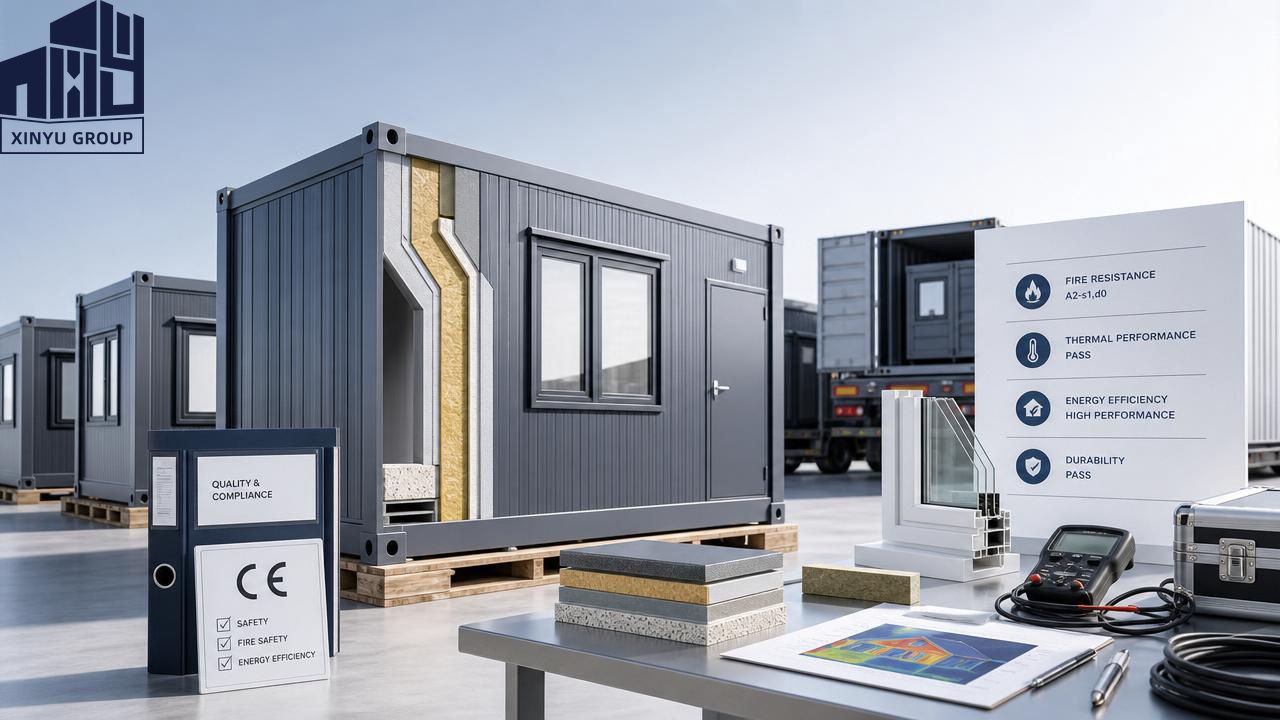
On June 12, 2026, the European Commission released an amendment under Regulation (EU) 2026/1189 that brings prefabricated modular units into the mandatory CE certification scope and adds new fire and energy-efficiency requirements. For Chinese exporters of container houses used for residential, office, and commercial purposes, the update is worth close attention because it affects market access, testing timelines, design compliance, and cross-border delivery planning ahead of the new application and customs deadlines.
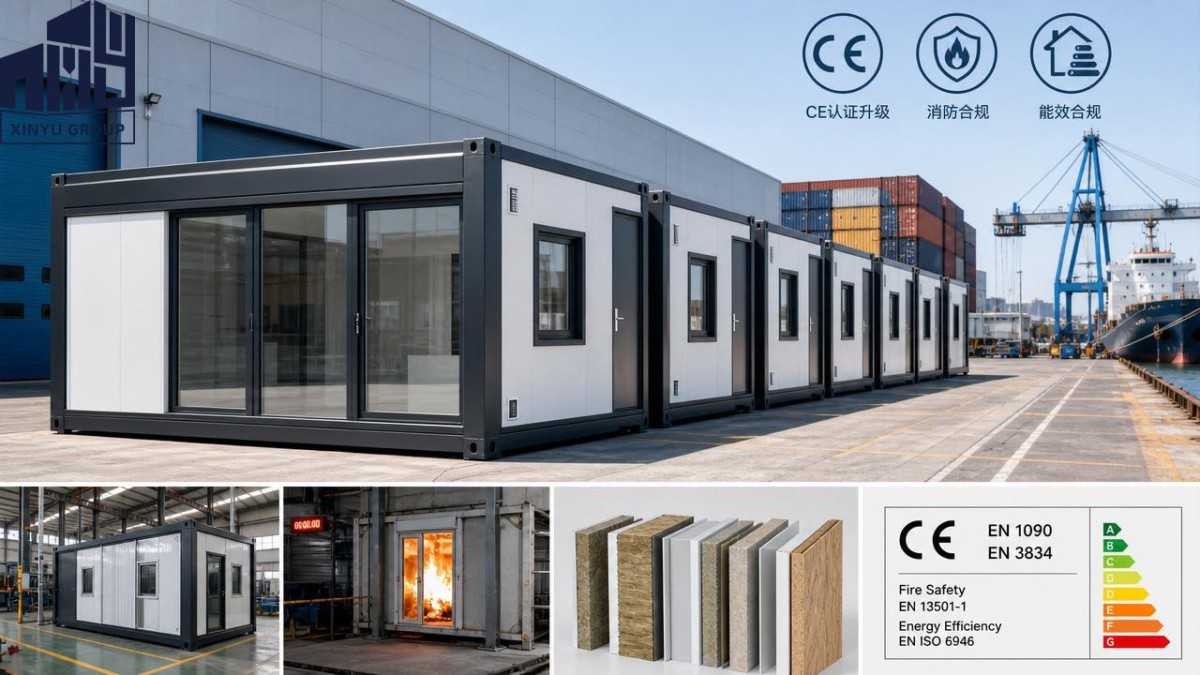
What the new EU amendment confirms
According to the information provided, the amendment was issued by the European Commission on June 12, 2026. It formally places prefabricated modular units within the compulsory CE certification framework.
The new requirements add EN 13501-1:2024 fire classification at B-s1,d0 level and EN ISO 13790 energy performance calculation requirements. The rule applies to container houses exported to the EU for residential, office, and commercial use.
New applications will be accepted from July 1, 2026. From January 1, 2027, products that have not obtained the updated CE certificate will be barred from customs clearance. The change is stated to directly affect Chinese suppliers through export access conditions, an added testing cycle of 12 to 18 days, and higher BIM-integrated design compliance costs.
Where the pressure will likely appear first
Export-facing manufacturers and traders
From an industry perspective, this group is the most immediately exposed because CE compliance is tied directly to whether products can enter the EU market. The main impact is likely to appear in certification preparation, technical documentation, delivery scheduling, and customer commitments linked to shipment dates.
Design and engineering teams
Analysis shows that the addition of fire classification and energy-performance calculation requirements shifts part of the compliance burden upstream into design work. Teams involved in modular planning, specification matching, and BIM-integrated design may need to pay closer attention to whether current technical outputs can support the revised certification pathway.
Testing, documentation, and supply chain service providers
Observably, service providers connected to testing, certification files, and export coordination may face tighter timing expectations because the stated testing cycle increases by 12 to 18 days. What deserves closer attention is not only the test itself, but also how document readiness and handoff timing affect customs clearance and delivery windows.
EU buyers and project-side purchasers
Purchasers and end-use project stakeholders may also be affected because the rule applies to residential, office, and commercial container housing entering the EU. The practical concern is whether suppliers can transition to the updated CE pathway in time, especially for orders scheduled close to the 2027 customs cutoff.
What companies should watch now
Separate the application date from the customs deadline
One practical point is the difference between July 1, 2026, when new applications begin, and January 1, 2027, when products without the updated CE certificate can no longer clear customs. These are not the same compliance milestone, and companies should avoid treating them as a single date in internal planning or customer communication.
Check which product lines fall within scope
The provided information clearly points to residential, office, and commercial container houses exported to the EU. Companies should therefore focus first on the product categories and destination orders that fall directly within that scope, rather than assuming all modular products are affected in the same way.
Review files tied to fire and energy modules
Analysis shows that the added EN 13501-1:2024 and EN ISO 13790 requirements make technical files more important in the near term. For businesses, the immediate issue is whether current drawings, specifications, test preparation materials, and BIM-linked outputs can support the revised certification process without delaying orders.
Reset delivery and customer communication assumptions
Because the provided summary states that testing may take 12 to 18 days longer, contract timelines, factory scheduling, and buyer communication may need rechecking. What deserves closer attention is whether current lead-time promises still match the certification path required for EU-bound shipments.
Why this looks like more than a short-term paperwork change
As an observation, this update is better understood as an operational compliance signal rather than a one-off administrative adjustment. The reason is that the change does not only affect labeling or formal market entry status; it also reaches into testing duration, design integration, and the preparation of technical evidence for EU exports.
At the same time, it is not yet appropriate to overstate broader market conclusions beyond the facts provided. Based on the available information, the clearest takeaway is that the compliance threshold for EU-bound container housing is becoming more structured around fire safety and energy calculation, and this deserves continued attention from exporters and project-side buyers.
How this news is best interpreted at this stage
At this stage, it is more appropriate to understand the development as a confirmed regulatory change with immediate planning implications and longer-term significance for export execution. The confirmed facts already affect certification access, testing timelines, and design-related compliance costs, while the broader commercial impact still depends on how companies adjust their documentation, scheduling, and customer coordination over the coming months.
Basis of this article and follow-up points
This article is based on the user-provided news title, event date, and event summary. For this type of industry update, commonly relevant source categories include official regulatory notices, company announcements, industry association updates, authoritative media coverage, and standards-related documents. No specific official source link was provided in the input, so the exact source document link still needs ongoing verification. Follow-up attention should remain on any further official wording, implementation clarifications, and practical certification details connected to the new CE requirements.
Need Us to
Contact You?
We received your message and will contact you as soon as possible.
Thank you for your visit.