news
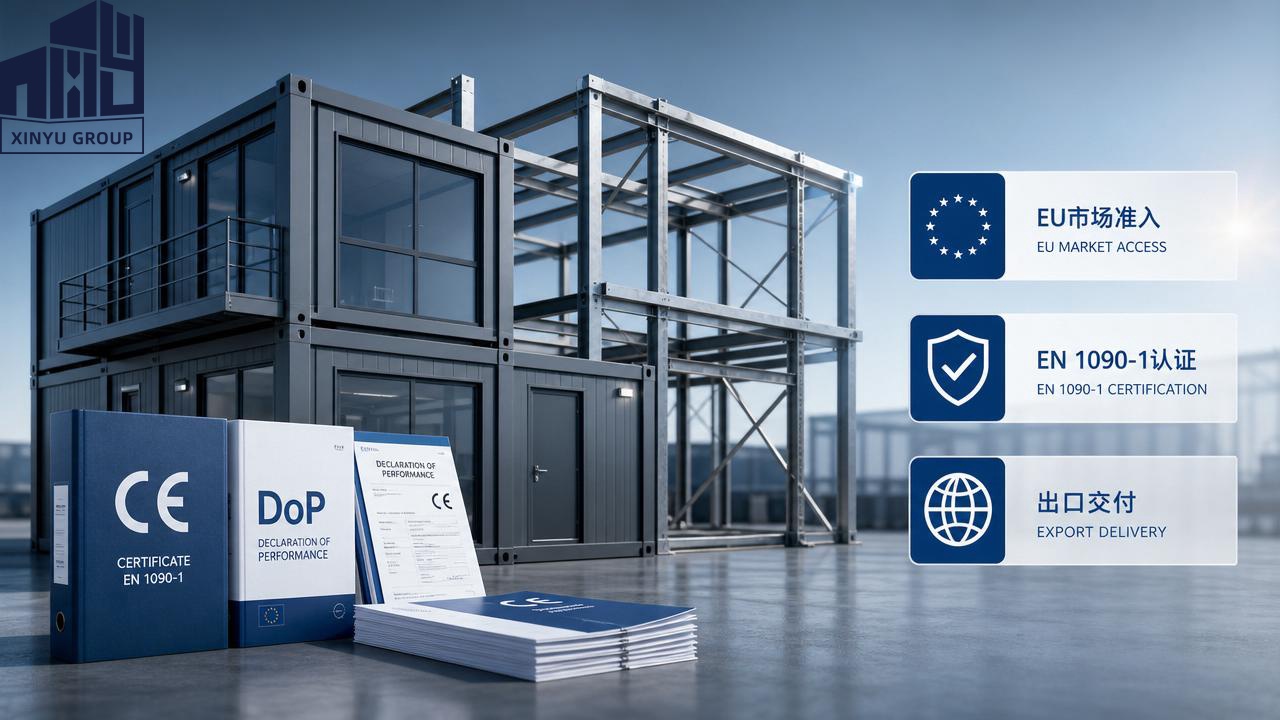
On June 1, 2026, the EU began mandatory enforcement of updated implementing rules under the Construction Products Regulation, bringing modular container housing within the scope of compulsory CE-related compliance. For exporters, project suppliers, and delivery teams serving markets such as Germany, the Netherlands, and Poland, the key issue is no longer only product delivery, but whether integrated container houses entering the EU can meet EN 1090-1:2009+A1:2011 conformity requirements and support a valid DoP issued through an EU Notified Body.
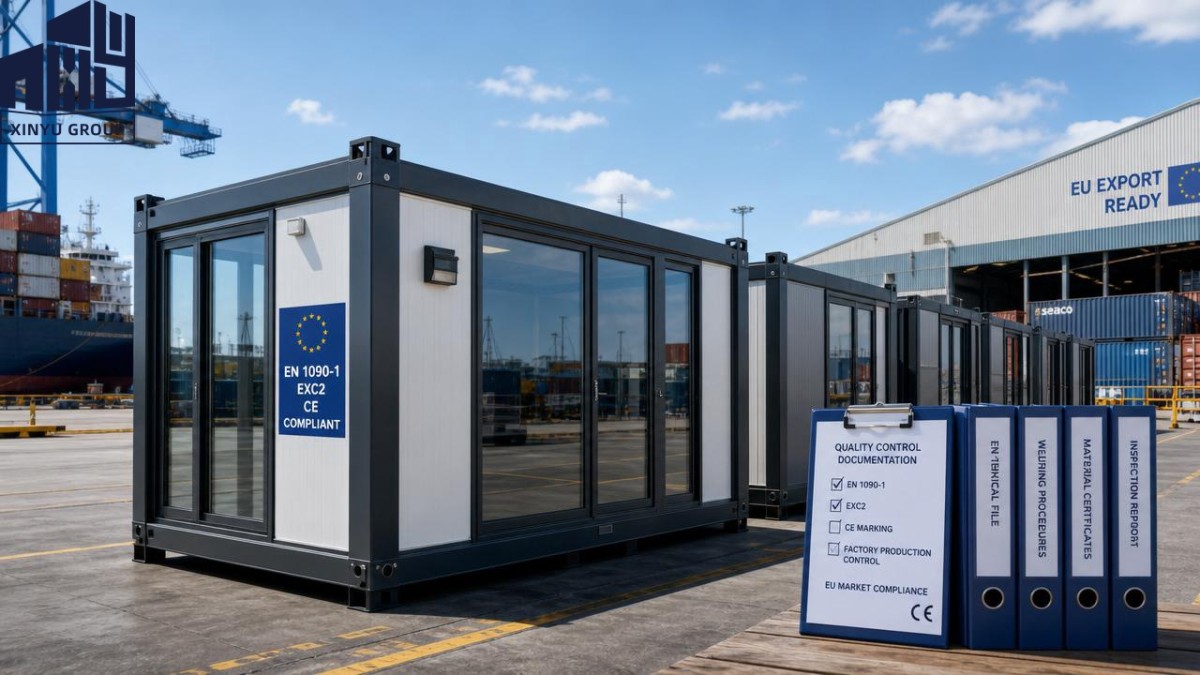
What the June 1 requirement formally changes
According to the provided information, the updated implementation of CPR (EU) No. 305/2011 took effect on June 1, 2026. The rule explicitly places modular container houses within the mandatory certification scope tied to CE market access in the EU.
The same information states that all integrated container houses entering the EU market must pass conformity assessment for steel structure execution under EN 1090-1:2009+A1:2011. It also states that a DoP must be issued by an EU Notified Body.
The direct business impact identified in the source information concerns Chinese exporters supplying emergency accommodation units, commercial quick-install housing, and cultural or tourism modular housing to countries including Germany, the Netherlands, and Poland.
Where the pressure is likely to appear across the business chain
Export transactions now hinge more directly on compliance documents
From an industry perspective, direct trade companies are likely to feel the impact first because market entry is tied to whether the exported integrated container house can satisfy the stated conformity pathway. The pressure is likely to show up in quotation stages, contract terms, document preparation, and shipment readiness, especially where customers expect proof that the product can legally enter the EU market.
Manufacturing and fabrication teams face a tighter delivery interface
For processing and manufacturing companies, the immediate issue is not only production output but whether the steel-structure-related execution consistency can align with EN 1090-1:2009+A1:2011 as required by the provided information. The affected business link is likely to be the handoff between production completion and export delivery, where compliance evidence becomes part of practical shipment readiness.
Project buyers and downstream users may focus more on acceptance risk
Buyers, project developers, and end-use organizations involved in emergency housing, commercial fast-deploy projects, or tourism-related modular installations may be affected because delivery compliance can influence whether a project proceeds smoothly. What deserves closer attention is the risk that a product may be physically available but not commercially ready for acceptance if the required conformity route and DoP are not in place.
Supply chain service providers may need closer coordination on lead times
Analysis shows that logistics, documentation, and delivery coordination providers may also be affected indirectly. The main pressure point is likely to be schedule coordination, because compliance preparation, document review, and shipment timing may need to be aligned more tightly when serving EU-bound container housing projects.
What companies should watch in day-to-day execution
Separate confirmed rules from internal assumptions
The confirmed points in the provided information are clear: scope inclusion, EN 1090-1:2009+A1:2011 conformity assessment, and DoP issuance through an EU Notified Body. Companies should distinguish these confirmed requirements from any internal interpretation about how fast individual customers, projects, or channel partners will adjust their procurement standards.
Review which product categories and destinations are exposed first
The information specifically points to emergency accommodation units, commercial quick-install housing, and cultural or tourism modular housing exported to Germany, the Netherlands, and Poland. For companies with mixed product lines, this makes product mapping and destination-market review a practical priority rather than a general compliance discussion.
Check documentation readiness before delivery commitments
Observably, the practical issue for exporters is whether customer communication, order confirmation, and shipment planning already reflect the required conformity assessment path and DoP expectations. This is especially relevant where delivery promises were built around product completion dates rather than document completion status.
Prepare for closer supplier and client coordination
Where multiple parties are involved in fabrication, assembly, export, and project acceptance, businesses may need to pay closer attention to qualification records, supporting documents, delivery sequencing, and customer-facing explanations. Analysis shows that the operational gap often appears not in understanding the rule itself, but in aligning all parties around what must be ready before EU market entry.
Why this matters beyond a single compliance notice
As an editorial observation, this update is better understood as an already effective market-entry requirement rather than a distant policy signal, because the provided information states that mandatory enforcement starts on June 1, 2026. At the same time, it is also more appropriate to understand it as part of a longer-term compliance shift in cross-border modular housing trade, since the immediate requirement affects actual delivery eligibility.
Observably, the reason the industry should keep watching this development is that the rule connects technical conformity, commercial documentation, and project delivery into one compliance chain. That does not by itself prove how every market participant will respond, but it does indicate that exporters and buyers can no longer treat certification as a secondary issue after sales agreements are made.
How to read the signal at this stage
Based on the provided information, the most balanced reading is that this is not merely a short-term headline change and not a speculative long-range trend. It is a concrete rule taking effect on a defined date, with direct relevance to container housing exports into the EU.
For industry participants, the practical meaning lies in delivery compliance, document readiness, and transaction certainty. It is more appropriate to understand this development as an active compliance threshold that also signals a broader need for closer rule tracking in the modular container housing trade.
Basis of this article and points for follow-up verification
This article is generated from the user-provided news title, event date, and event summary. The analysis is limited to the confirmed information supplied in the input and does not rely on unverified market data, company disclosures, or external project examples.
For this type of industry update, common source categories usually include official regulatory notices, company announcements, industry association updates, authoritative media reporting, and standard-related documents. A specific official source link was not provided in the input, so the exact official publication path still requires continued verification. Follow-up attention should remain on any official wording updates, practical interpretation in export transactions, and implementation details that affect documentation and delivery workflows.
Need Us to
Contact You?
We received your message and will contact you as soon as possible.
Thank you for your visit.