news

On October 1, 2026, EN 16034-2:2026 became mandatory following its publication in the Official Journal of the European Union on July 9, 2026 as a supporting standard under the revised Construction Products Regulation framework. The change matters because integrated fire door systems used in container-based buildings are now clearly brought into a regulated compliance path that requires both CE access for the EU market and UKCA access for the UK market, alongside third-party type testing and factory production control documentation. For exporters of container offices, medical cabins, student accommodation units, and other modular products using fire-rated door assemblies, this is not just a technical update but a direct shift in certification, procurement, and delivery preparation.
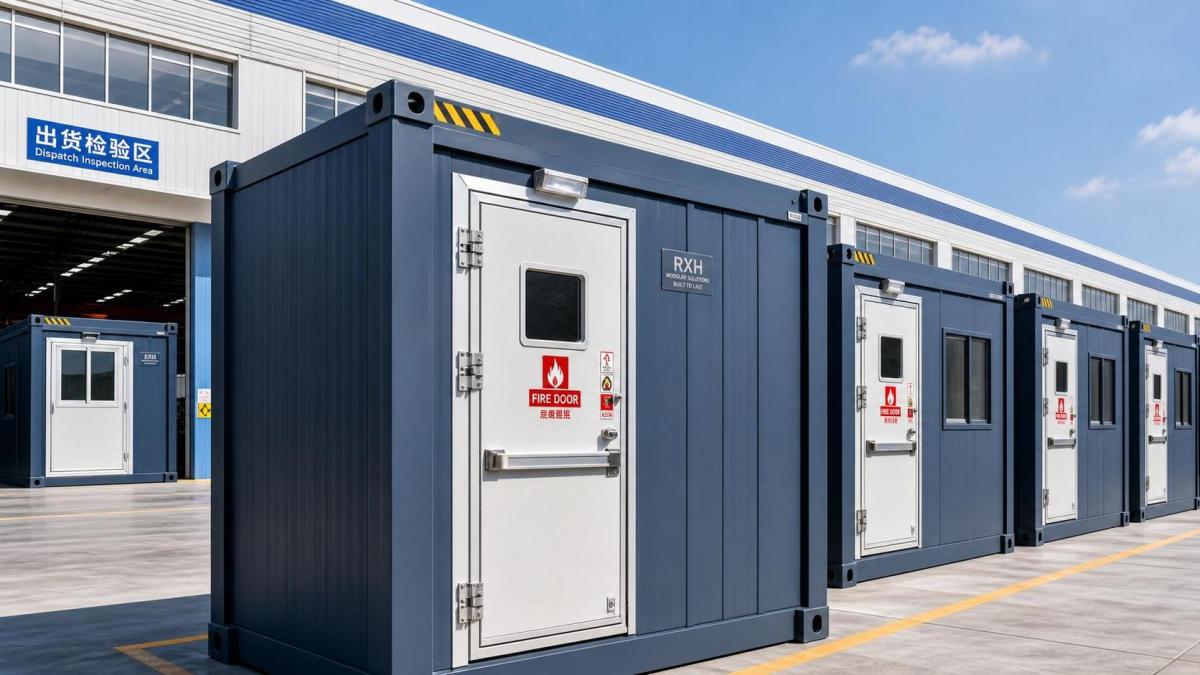
What the standard now makes explicit
The confirmed facts are limited but commercially important. EN 16034-2:2026 was published in the OJEU on July 9, 2026 and became mandatory on October 1, 2026. According to the provided event summary, the standard is tied to the revised CPR framework and explicitly places integrated fire door systems used in container housing within the scope of CPD supervision. The requirement set described in the input includes dual certification expectations for CE in the EU market and UKCA in the UK market, together with submission of third-party type test reports and factory production control, or FPC, documentation. The change directly affects export compliance pathways for container office units, medical modules, and student housing products that rely on modular fire-protection assemblies.
Where the compliance pressure is likely to appear first
Export project suppliers face a narrower documentation margin
From an industry perspective, exporters of container-based building units are likely to feel the change first because the fire door system is part of the delivered product rather than a separate afterthought. The practical impact is likely to show up in product file preparation, certification alignment by target market, and shipment readiness. What deserves closer attention is whether existing export documentation packages clearly cover the integrated fire door assembly, the relevant test evidence, and the associated FPC records for the intended destination market.
Manufacturers of modular fire assemblies may need tighter production traceability
Analysis shows that manufacturers supplying integrated fire-rated door systems into container products may be affected at the production and quality-document level. Because the event summary specifically mentions third-party type inspection reports and FPC documentation, the burden is not limited to product performance claims alone. It also reaches how production is controlled, recorded, and presented during compliance review. For these suppliers, the key issue is less about broad market messaging and more about whether technical files, production controls, and product-to-project matching are ready for customer or certification review.
Procurement and delivery teams may need earlier certification checks
Observably, procurement teams and project delivery coordinators may also be affected because dual certification expectations can influence supplier selection and delivery timing. Where a container office, medical cabin, or student accommodation unit is specified with a modular fire unit, procurement teams may need to confirm earlier in the process whether the selected system is supported by the required test reports and FPC materials. The operational risk here is not proven delay as a fact, but the possibility that missing or incomplete compliance files could complicate tender response, order confirmation, or final acceptance.
Testing and certification service providers may see more file-based review work
From an industry perspective, certification-related service providers and testing bodies are likely to be drawn more directly into export preparation because the rule change highlights the need for third-party evidence and formal production-control documents. The main business implication is likely to be increased attention to report completeness, scope matching, and whether supporting records can satisfy both market-access routes referenced in the event summary.
Practical checkpoints for companies now
Review whether product scope and market scope are aligned
Analysis shows that companies should first check whether the container product being exported includes an integrated fire door system within the scope described by the new standard. The next checkpoint is market alignment: if the business model covers both EU and UK destinations, the compliance review should not assume that one certification path alone is sufficient.
Recheck technical files before tendering or shipment
What deserves closer attention is the completeness of technical documentation. Based on the provided facts, third-party type test reports and FPC documentation are core items. Companies involved in bidding, project sales, and export delivery should therefore verify whether current files are complete, current, and clearly linked to the specific fire door configuration used in the container unit.
Look closely at supplier qualification and document handover
Observably, firms buying modular fire door assemblies from external suppliers should pay attention to supplier qualification and document transfer discipline. If the fire-rated assembly is sourced rather than produced in-house, the compliance risk may sit at the interface between component supply and final module export. The practical point is to confirm not only the product itself, but also the availability and consistency of supporting certification and production-control records.
Keep watching for execution language in market documents
It is more appropriate to understand this as a rule change with immediate compliance significance, while some execution details may still require close reading in actual commercial use. Companies should therefore monitor how certification expectations appear in tender documents, customer specifications, technical approval requests, and acceptance procedures, rather than relying only on headline interpretations.
Why this looks like a market-access signal, not a routine update
Analysis shows that the importance of this development lies in its effect on compliance pathways, not merely in the publication of another standard text. By explicitly bringing integrated fire door systems in container-based buildings into a defined regulatory scope and attaching dual certification expectations, the event sends a concrete execution signal to exporters and their supply chains. At the same time, it would be premature to treat every downstream commercial consequence as settled fact. Industry participants still need to observe how certification practice, technical review language, and buyer-side requirements are applied in real transactions.
How the industry is better off reading this change
At this stage, it is more appropriate to understand the development as an implemented compliance change with immediate relevance for affected export products, especially where modular fire units are embedded in the delivered structure. The commercial meaning is straightforward: certification planning, supplier documentation, and delivery preparation now deserve earlier coordination. The broader market effect, however, still needs to be judged cautiously through actual procurement behavior, certification handling, and project execution feedback.
Basis of this article and what still needs verification
This article is generated from the user-provided news title, event date, and event summary. Source types commonly relevant to developments of this kind include official notices, regulatory publications, trade or customs authority information, industry association updates, standards organization documents, and reporting by established professional media. A specific official source link was not provided in the input, so the exact link still needs to be verified on an ongoing basis. Further observation is also needed on detailed implementation language, certification practice, tender document changes, market feedback, and how affected companies execute compliance in actual export projects.
Need Us to
Contact You?
We received your message and will contact you as soon as possible.
Thank you for your visit.