news
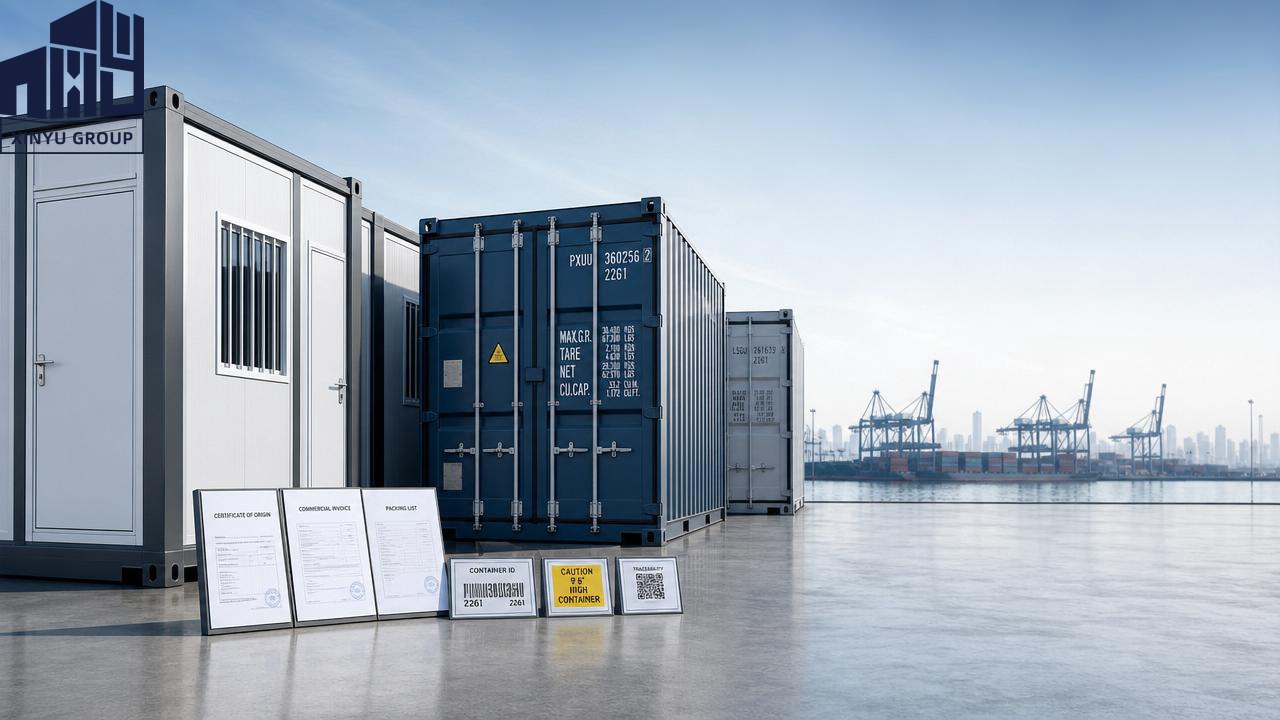
On May 19, 2026, a criminal case filed by the U.S. Department of Justice against four Chinese container manufacturers and seven executives brought a competition-law issue into the center of cross-border compliance review. Although the case is described as focusing on standard dry freight containers rather than container housing products, the spillover has already drawn closer customs and trade scrutiny toward modular container-based building products, including flat-pack housing, especially around origin declarations, retrospective anti-dumping checks, and antitrust-related compliance questions. For exporters, buyers, supply-chain service providers, and project contractors, the issue is no longer limited to pricing allegations in one product segment; it now touches documentation, procurement review, delivery planning, and market-entry risk.
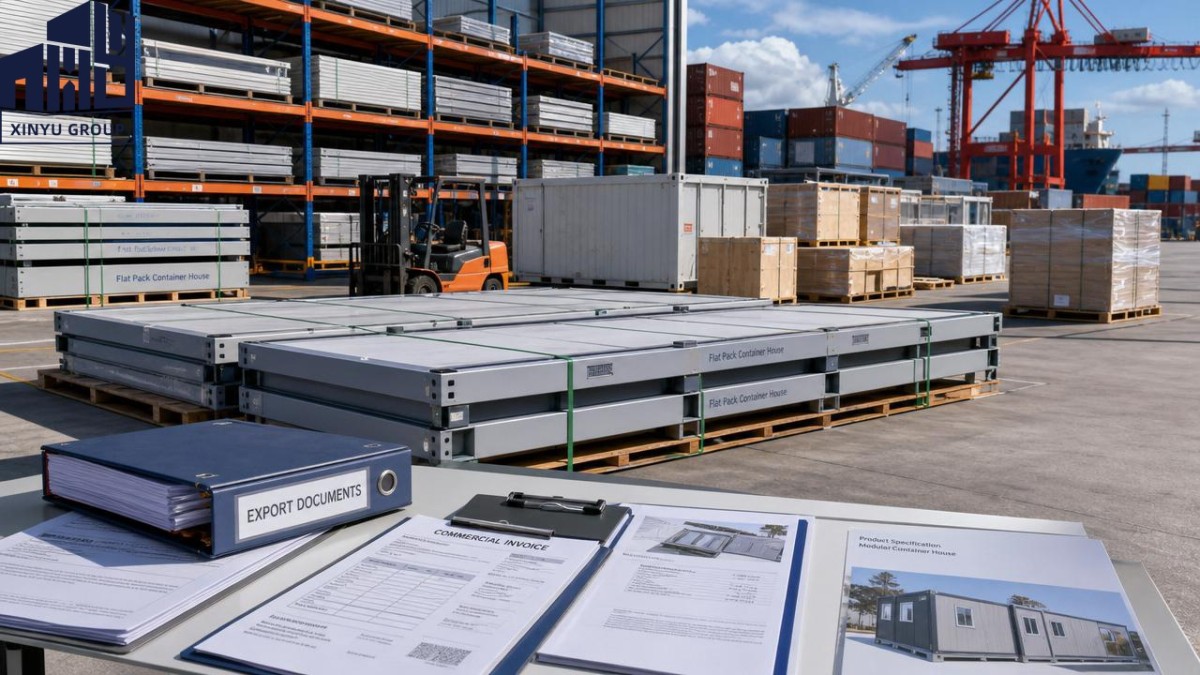
What has been confirmed so far
According to the information provided, the U.S. Department of Justice filed criminal charges on May 19, 2026 against CIMC, Singamas, Shanghai Universal, and CXIC, along with seven executives. The allegation is that from 2019 to 2024 they conspired to restrict capacity and manipulate prices.
The information provided also makes clear that the action centers on standard dry freight containers, not container house products. At the same time, it states that the case has triggered a chain reaction in global compliance review of "Made in China" supply chains.
Within that reaction, customs authorities in the EU, Canada, and Mexico are described as having recently strengthened scrutiny of modular building container products, including flat-pack housing, with particular attention to origin declarations, retrospective anti-dumping verification, and antitrust compliance inquiries.
Why scrutiny may spread beyond the named product
For exporters, the pressure moves into paperwork and declarations
From an industry perspective, exporters of modular container-based products may face greater review because enforcement attention is now extending from a specific antitrust case into broader trade-compliance screening. The most immediate pressure is likely to appear in origin statements, product classification consistency, supplier documentation, and the ability to explain how goods differ from the product scope at the center of the case.
For buyers and project procurement teams, sourcing decisions may slow down
Buyers, importers, and project-based procurement teams may be affected because purchasing decisions involving Chinese-made container-related products can now attract additional compliance questions. What deserves closer attention is not only price or lead time, but also whether tender files, supplier onboarding materials, and contract documents are sufficient to address origin, anti-dumping exposure, and competition-law concerns raised during review.
For logistics and supply-chain service providers, delivery risk becomes more document-sensitive
Supply-chain service providers may see the impact in customs coordination, shipment release timing, and supporting document completeness. Where authorities ask for retrospective verification or expanded declarations, freight planning and customs clearance can become more dependent on traceable records across manufacturing, sourcing, and export stages.
For compliance, testing, and certification-related service firms, review scope may widen
Analysis shows that service providers supporting documentation, conformity review, and technical submissions may face more requests tied to product identity and traceability. Even without a new formal certification rule confirmed in the provided information, the market may still ask for more complete technical files and supporting records to satisfy buyer and customs inquiries.
What companies should watch in current practice
Keep origin and product-scope records aligned
Companies involved in modular container products should pay close attention to whether origin declarations, supplier records, and product descriptions remain internally consistent. Because the provided information mentions stronger scrutiny of origin claims and retrospective anti-dumping verification, any mismatch between commercial documents and actual supply-chain records may create practical risk.
Review tender packs and customer-facing compliance materials
Observably, customer due diligence may become more detailed before orders are confirmed. Exporters and suppliers should therefore review tender responses, technical submissions, and compliance statements to make sure they clearly describe product type, supply origin, and supporting records without overstating certainty beyond what can be documented.
Prepare for longer pre-shipment and post-entry questions
It is more appropriate to understand this as a signal for tighter review rather than a confirmed uniform rule across all markets. Even so, companies should watch for possible increases in pre-shipment questions from buyers and post-entry follow-up from customs or trade reviewers, especially where products are close in category or presentation to container-based construction solutions.
Track how counterparties adjust procurement and risk controls
From an industry perspective, supplier qualification and purchasing approval may become more cautious. Firms should monitor whether customers, distributors, or project owners start asking for expanded source documentation, competition-law representations, or stronger traceability support before shipment or acceptance.
How this signal should be read at this stage
Analysis shows that this development is best read as an enforcement signal with cross-border compliance effects, rather than as proof that a fully unified new trade rule has already taken shape across all affected markets. The confirmed facts point to a U.S. criminal antitrust action and to increased customs attention in several markets; however, the detailed execution standards, review depth, and market-by-market application still require continued observation.
What deserves closer attention is the way one antitrust case is influencing adjacent areas such as origin review, anti-dumping traceability, and buyer-side due diligence for related container-based products. That linkage matters because it can alter how commercial risk is assessed even before any new formal rule is announced.
A practical reading for the market
The immediate significance of this event is not limited to the named defendants or to standard dry freight containers. It more appropriately signals that authorities and market participants may apply stricter compliance scrutiny to related Chinese-made container and modular building products, especially where origin, product scope, and pricing history need to withstand closer review.
A neutral conclusion at this stage is that companies should treat the development as an active compliance warning and an execution-level trade signal. It is not yet a basis for assuming uniform outcomes across all jurisdictions, but it is strong enough to justify closer attention to documentation, sourcing logic, procurement controls, and delivery planning.
Basis of this article and what still needs verification
This article is generated from the user-provided news title, event date, and event summary. The specific official source link was not provided in the input, so the underlying official materials still need to be checked on an ongoing basis.
For events of this kind, commonly relevant source types include official announcements, releases from regulatory authorities, customs or trade authority information, industry association updates, standards-related documents, and reporting by established media outlets. Further verification should continue around detailed enforcement language, customs practice, certification interpretation, tender-document changes, industry feedback, and company-level implementation responses.
Need Us to
Contact You?
We received your message and will contact you as soon as possible.
Thank you for your visit.