news

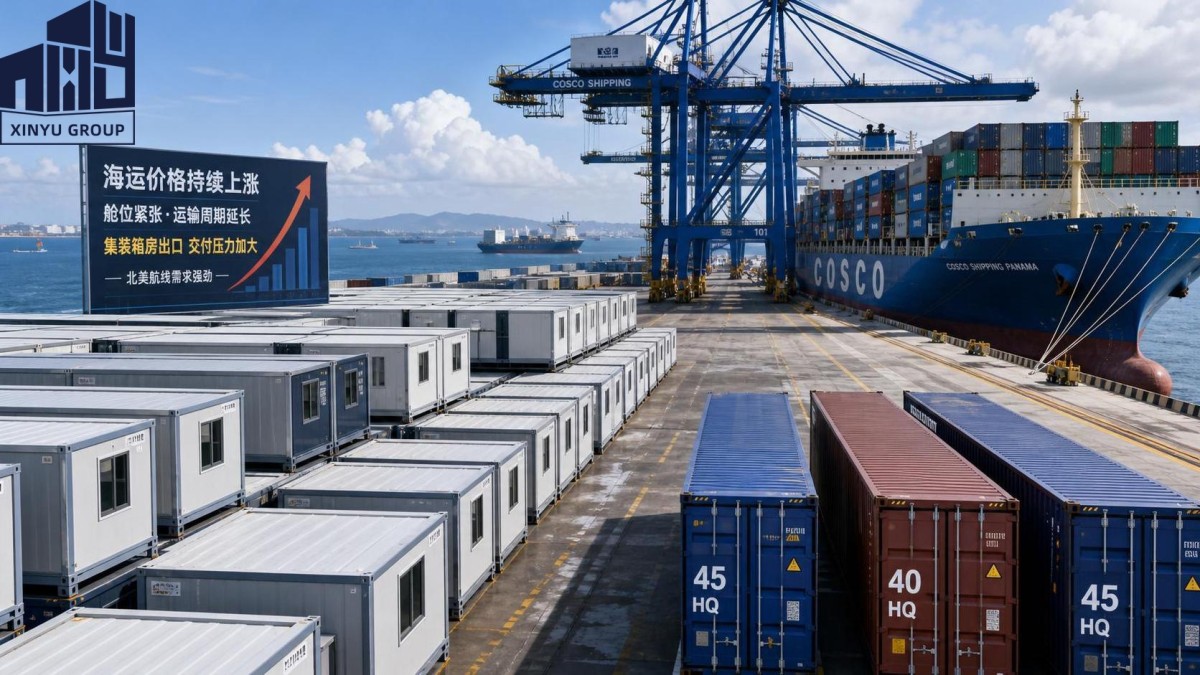
On June 15, 2026, COSCO Shipping began applying a peak season surcharge (PSS) to cargo moving from Oceania, the Indian subcontinent, and the Middle East to the United States and Canada. For container house exporters that rely heavily on ocean freight, the move puts immediate pressure on delivered cost and shipment timing, while overseas importers need to revisit procurement budgets, customs timing, and minimum order planning.
What Has Been Confirmed So Far
The confirmed update is limited but commercially significant. COSCO Shipping stated that, effective June 15, 2026, a PSS applies to exports from Oceania, the Indian subcontinent, and the Middle East bound for the US and Canadian markets.
The surcharge is set at USD 1,600–2,000 for 20GP, 40GP, and 40HQ containers, while the fee for 45HQ containers is USD 2,532. Based on the information provided, the direct impact falls on container house exporters using sea freight as a primary channel, with higher logistics cost and potential pressure on delivery schedules.
Where the Pressure Is Most Likely to Appear
Exporters shipping by sea face immediate cost adjustments
From an industry perspective, exporters of container houses are the first group affected because ocean freight is closely tied to final delivered pricing. The impact is most visible in quotation management, contract execution, and shipment planning, especially where orders were priced before the surcharge took effect.
Overseas buyers may need to rework landed-cost assumptions
Analysis shows that importers in the US and Canada are likely to focus on the full landed cost rather than freight alone. The issue is not only the surcharge itself, but also how it changes budget approval, customs-related scheduling, and order size decisions when transport costs rise within a short period.
Supply chain service providers must manage timetable expectations
For logistics coordinators, forwarders, and related service partners, the key pressure point is execution visibility. What deserves closer attention is whether cost changes begin to affect booking rhythm, handover timing, and communication between exporters and buyers on revised delivery expectations.
What Companies Should Watch Now
Check how the surcharge is reflected in current quotations
Companies should review whether active offers, pending contracts, and shipment budgets already account for the new PSS. This is especially relevant for transactions where pricing was agreed before June 15, 2026, but shipment is arranged afterward.
Reassess order size and shipment batching
Because the surcharge is tied to container type, exporters and buyers may need to compare the economics of different load plans. Observably, changes in minimum order quantity or shipment consolidation could become part of near-term negotiations, even if demand itself has not changed.
Keep customer communication aligned with delivery timing
Where delivery commitments depend on sea freight schedules, clear communication becomes a practical priority. Businesses should distinguish between the confirmed surcharge itself and any internal estimate about downstream timing effects, so that customers receive updated but not overstated guidance.
Monitor whether the announced terms remain unchanged
The current information confirms the implementation and fee levels, but companies should continue checking for any later clarification in carrier wording, scope interpretation, or applicable shipment conditions. In practice, this matters for document preparation, shipment booking decisions, and internal cost control.
How This Update Should Be Read
Analysis shows that this development is best understood first as a short-term operational cost event rather than a fully formed long-term market conclusion. The confirmed fact is the surcharge and its immediate cost implication; the broader effect on trade behavior, order patterns, and delivery planning still requires observation.
From an industry perspective, the importance of this update lies in how quickly freight-related charges can alter execution assumptions in container house exports. It is more appropriate to understand this as a signal that businesses with tight shipping-cost sensitivity should stay alert, rather than as proof of a broader structural shift on its own.
A Near-Term Signal Worth Following
At this stage, the most balanced reading is that the surcharge creates immediate budgeting and fulfillment pressure for sea-freight-dependent container house exports to North America. The direct commercial effect is clear, but the longer-term significance depends on whether similar adjustments persist, expand, or trigger broader changes in buyer behavior.
For now, the update is better treated as a near-term industry signal with concrete operational consequences and a need for continued monitoring, not as a definitive indicator of a lasting market reset.
Basis of This Article
This article is generated from the user-provided news title, event date, and event summary. The confirmed information used here is limited to the stated surcharge implementation date, applicable origin and destination markets, container-based fee levels, and the described implications for exporters and overseas importers.
For this type of industry update, commonly relevant source categories may include carrier notices, company announcements, industry association updates, authoritative media coverage, and related trade documentation. A specific official source link was not provided in the input, so further verification remains necessary. What should continue to be monitored includes any later clarification on surcharge application terms and any practical impact on procurement, customs scheduling, and order planning.
Need Us to
Contact You?
We received your message and will contact you as soon as possible.
Thank you for your visit.