news

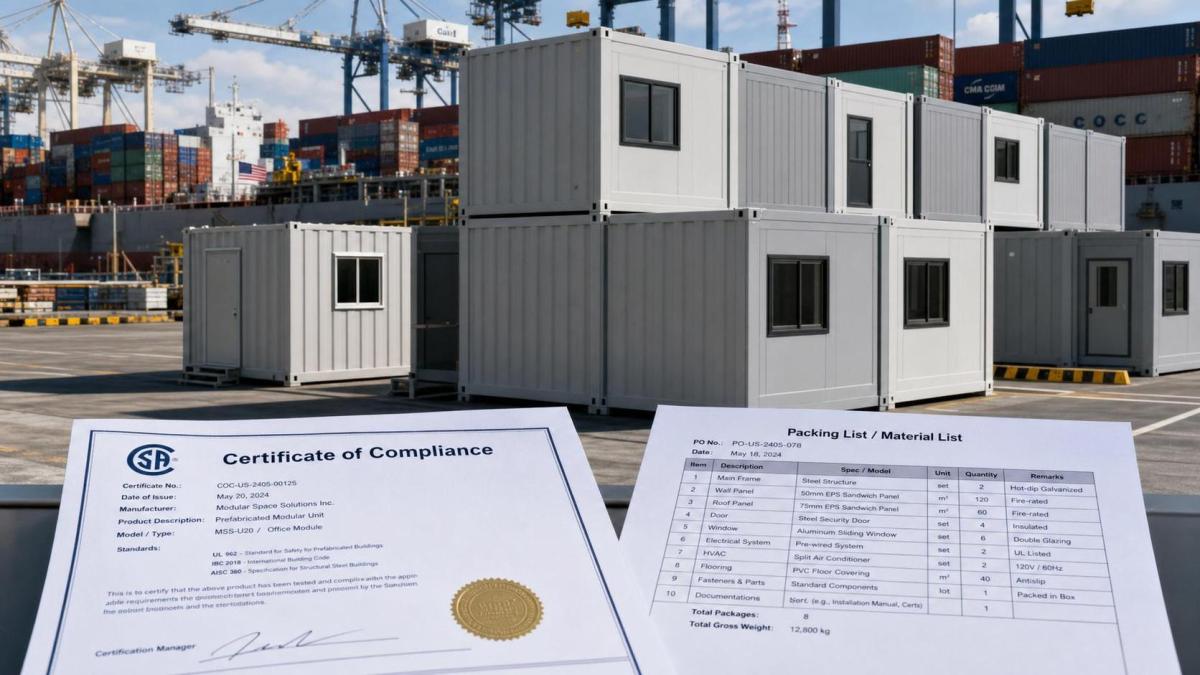
On August 1, 2026, a new U.S. customs compliance requirement began affecting imports of prefabricated container housing. Based on a temporary enforcement notice issued by U.S. Customs and Border Protection (CBP) on July 8, 2026, import declarations for modular housing units, office cabins, medical cabins, and other prefabricated container-based structures must now include a UL 2218 certificate issued by a recognized third-party body and a complete bill of materials (BOM). For exporters shipping to the U.S., especially Chinese suppliers, this is worth close attention because it directly touches customs clearance speed, documentation readiness, and the cost of compliance.
What the CBP Notice Requires From August 2026
According to the information provided, CBP issued a temporary enforcement notice on July 8, 2026 covering prefabricated container houses, including modular housing, office cabins, and medical cabins. Starting August 1, 2026, these products must be declared for import with two required documents: a UL 2218 certification certificate issued by a recognized third-party institution, and a complete BOM.
The same information states that if these materials are not provided at the time of import declaration, the shipment may face port detention, return shipment, or additional inspection. The requirement is described as having a direct impact on customs clearance efficiency and compliance costs for Chinese exporters.
Where the Pressure May Appear Across the Supply Chain
Exporters face the most immediate customs risk
From an industry perspective, direct trading companies are the first group exposed to this change because the requirement applies at the import declaration stage. The most immediate pressure is likely to appear in document completeness, shipment timing, and the ability to align product files with customs submissions. What deserves closer attention is whether exporters already have the required certification and BOM prepared before goods reach the port.
Manufacturers may feel the burden through technical documentation
Analysis shows that manufacturers of container housing, modular units, office cabins, and medical cabins may be affected through production documentation and product configuration management. Because a complete BOM is now part of the import filing requirement, the issue is not only whether a unit can be produced, but whether its material details can be clearly and consistently documented for cross-border compliance use.
Supply chain service providers may need tighter coordination
Observably, freight forwarders, customs brokers, and other supply chain service providers may also be drawn into the change because customs processing depends on whether supporting documents are ready and usable. Their operational focus is likely to shift toward earlier document checks, communication with exporters, and managing the risk of detention or additional inspection.
Buyers may pay closer attention to supplier readiness
For buyers and project-side purchasers, the issue is likely to center on delivery certainty. If suppliers have not prepared UL 2218 certification or a complete BOM in advance, shipment schedules and customs release timelines may become less predictable. In practical terms, supplier qualification and pre-shipment documentation review may become more important in procurement discussions.
What Companies Should Watch in the Near Term
Whether the current wording changes in follow-up notices
What deserves closer attention is the exact way CBP continues to express or enforce the requirement after the initial temporary notice. The rule is already operational from August 1, 2026 based on the provided information, but companies should still distinguish between the current enforcement signal and any later clarification in official wording or implementation practice.
Which shipments are most exposed to timing problems
Analysis shows that products already close to export, in customs preparation, or moving under tight delivery commitments may face the greatest short-term pressure. The practical issue is less about general policy discussion and more about whether the required certificate and BOM can match the declared shipment on time.
How supplier qualification links to order execution
For companies sourcing from multiple factories, especially smaller suppliers, this development makes supplier readiness a contract and execution issue rather than only a technical compliance issue. The information provided specifically notes the urgency for small and medium-sized suppliers that did not arrange UL certification in advance. That means importers and exporters may need to review supplier qualification, document ownership, and responsibility for filing support before shipment.
Whether customer communication is aligned with documentation status
Observably, customer communication now needs to stay closer to actual compliance readiness. Where certification or BOM preparation is incomplete, delivery expectations, customs timing, and contingency planning may need to be discussed earlier to reduce disputes tied to detention, return shipment, or extra inspection.
Why This Looks Bigger Than a Single Filing Detail
Analysis shows that this is more than a routine paperwork adjustment. The requirement links product compliance documentation directly to border clearance for prefabricated container housing entering the U.S. market. That matters because it places certification and material transparency closer to the transaction itself, rather than leaving them as secondary technical records.
At the same time, it is more appropriate to understand this as a regulatory signal that is already producing operational consequences, not yet as a fully closed long-term outcome. The provided information confirms the rule, the start date, and the possible enforcement consequences, but the broader market response still needs continued observation.
How to Read the Current Signal
For the industry, this update is best understood as an immediate compliance change with broader strategic meaning. In the short term, it affects customs clearance, documentation management, and shipment execution. In a wider sense, it signals that market access for prefabricated container housing is becoming more closely tied to recognized certification and traceable product information. A measured conclusion at this stage is that companies should treat the requirement as active and operational, while continuing to watch how enforcement and business practice develop from here.
Basis of This Article
This article is based on the user-provided news title, event date, and event summary. For this type of industry update, relevant source categories typically include official notices, company statements, industry association releases, authoritative media reporting, and standards-related documents. A specific official source link was not provided in the input, so the exact document path still requires ongoing verification. Continued attention should focus on any follow-up CBP wording, enforcement interpretation, and practical customs handling related to UL 2218 certification and BOM submission.
Need Us to
Contact You?
We received your message and will contact you as soon as possible.
Thank you for your visit.