news
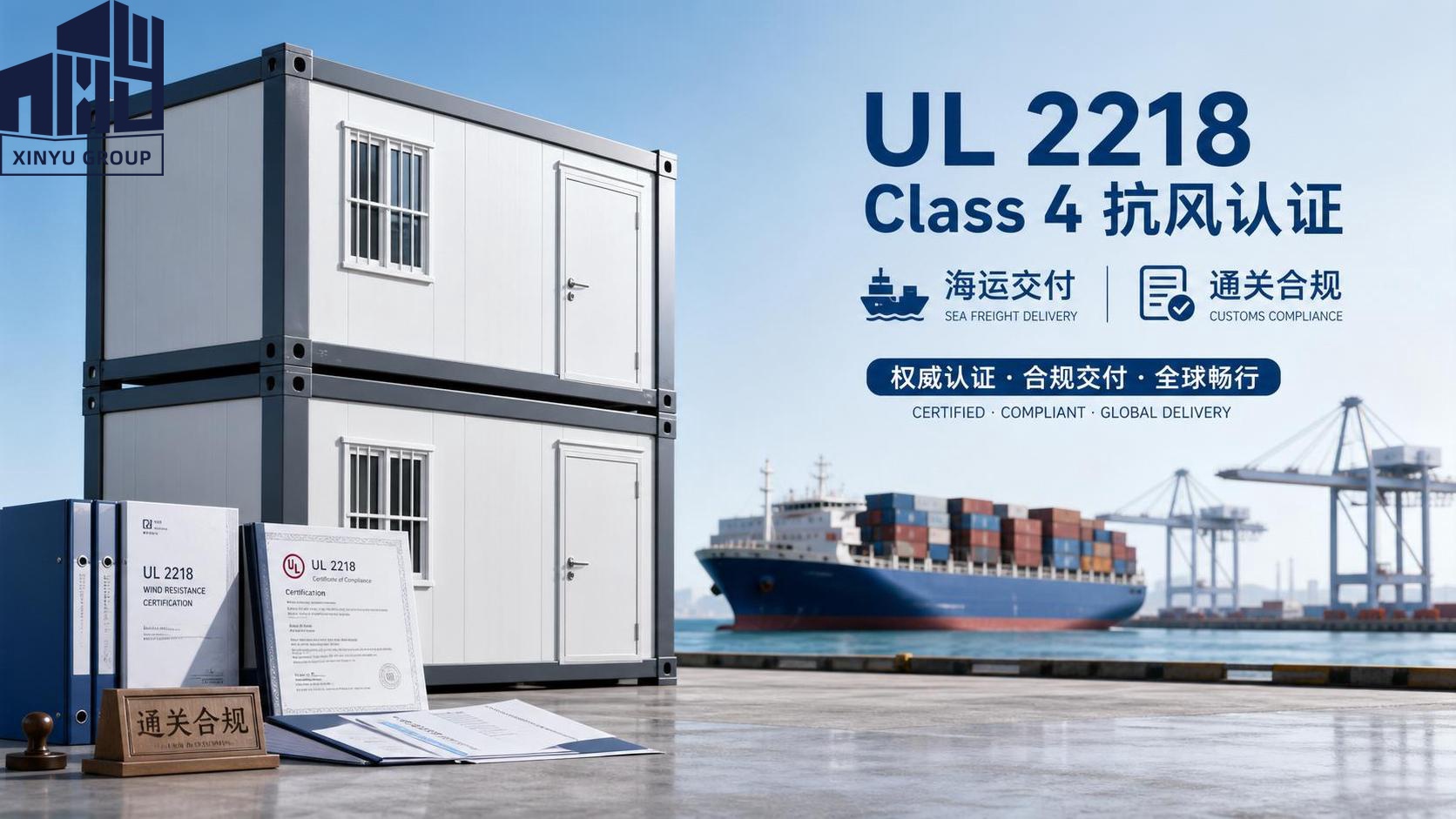
On July 15, 2026, a new U.S. import compliance requirement came into effect for container homes brought in as modular buildings. According to the event summary provided, CBP issued an emergency compliance notice on July 4 requiring imported units in this category, including pre-assembled modules delivered by sea, to be accompanied by a UL 2218 Class 4 wind-resistance certification report issued by an NRTL-recognized laboratory. This matters not only for exporters, but also for buyers, logistics providers, certification service participants, and delivery planning teams because the change directly affects customs clearance readiness and shipment release risk.

What the new import requirement confirms
The confirmed facts are limited but clear. CBP issued an emergency compliance notice on July 4, 2026. From July 15, 2026, all container homes imported in the form of modular buildings, including pre-installed units transported by sea, must include a UL 2218 Class 4 wind-resistance certification report. The report must be issued by a laboratory recognized under the NRTL framework. The requirement applies regardless of country of origin. The provided summary also states that many Chinese exporters have not yet completed the relevant UL system review, creating a risk of customs delays and returned shipments.
Where pressure is likely to appear across the trade chain
Export shipments face a document-driven clearance threshold
From an industry perspective, exporters are likely to be affected first because the rule is tied directly to import documentation at the point of entry. For businesses shipping container homes as modular units, the main issue is no longer only product delivery, but whether the shipment package includes an acceptable certification report before arrival. What deserves closer attention is the risk that a missing or non-matching report could disrupt clearance timing and shipment release.
Procurement and project buyers may need to tighten supplier screening
Buyers sourcing modular container homes for the U.S. market may also be affected because supplier qualification now has a more immediate compliance dimension. Analysis shows that procurement teams will need to pay closer attention to whether suppliers can provide the required UL 2218 Class 4 documentation from an NRTL-recognized laboratory, and whether that documentation is available early enough to support booking, customs filing, and planned delivery dates.
Certification and testing participants move closer to the transaction front end
The rule also increases the practical importance of certification-related service providers. Observably, testing and certification are no longer a background support item in this trade flow; they become part of shipment eligibility. For factories that have not completed the relevant review path, the pressure may emerge in order acceptance, export scheduling, and customer communication rather than only in post-production compliance checks.
Logistics and delivery coordination may face timing risk
Supply chain service providers, including those involved in shipping coordination and customs preparation, may need to treat certification completeness as a pre-shipment checkpoint. The immediate operational impact is likely to center on whether cargo can move without creating clearance delays, storage exposure, or return risk after arrival.
What companies should watch now
Review whether current products fall within the covered import form
Companies dealing in container homes should first examine whether their exported products are being imported as modular buildings, including pre-assembled units delivered by sea as described in the provided summary. That classification link matters because the requirement is framed around the import form of the product, not simply its commercial name.
Check certification readiness before shipment release
Analysis shows that the most immediate practical task is to verify whether a UL 2218 Class 4 wind-resistance report from an NRTL-recognized laboratory is available and aligned with the shipment. Where that documentation is incomplete, businesses may need to reassess shipping schedules, customer commitments, and clearance preparation rather than assuming the issue can be handled after cargo departure.
Revisit contract files, technical documents, and delivery commitments
What deserves closer attention is the connection between compliance documents and commercial execution. Exporters, buyers, and intermediaries may need to recheck technical files, transaction documents, and delivery arrangements to make sure certification expectations are reflected consistently. The provided information does not include a detailed enforcement method, so this should be treated as a compliance checkpoint that still requires careful verification in practice.
Monitor follow-up language and market execution
Because the summary provides the core requirement but not the full operational detail, companies should continue to watch for follow-up wording, implementation practice, and market-side document requests. This is especially relevant where customs handling, bid requirements, or buyer acceptance procedures may begin to mirror the new import threshold more strictly.
How this signal is best understood at this stage
Observably, this development is more than a general policy discussion and should be read as an active compliance signal tied to import execution, given the stated effective date of July 15, 2026. At the same time, it is not yet appropriate to treat every downstream consequence as settled fact because the provided information does not define the full enforcement rhythm, document review practice, or market response. From an industry perspective, the immediate significance lies in the elevation of certification from a supporting technical matter to a practical customs-access condition for covered products.
Why the market should read it as an execution issue
At this stage, it is more appropriate to understand the event as a landed rule change with direct operational relevance, while still recognizing that the exact execution pattern may need further observation. The clearest message for the market is that shipment readiness, certification readiness, and delivery readiness are now more tightly linked for imported modular container homes entering the United States under the described scope.
Basis of this article and what still needs verification
This article is generated solely from the user-provided title, event date, and event summary. For events of this type, market participants would normally also compare official notices, regulator releases, customs or trade authority information, standard-related materials, industry association updates, and reporting from authoritative media. However, no specific official source link was provided in the input, so the exact official text and follow-up interpretation still need to be verified on an ongoing basis. Further observation is still needed regarding detailed implementation language, certification review practice, bid-document changes, industry feedback, and how affected companies carry out compliance in actual transactions.
Need Us to
Contact You?
We received your message and will contact you as soon as possible.
Thank you for your visit.