news

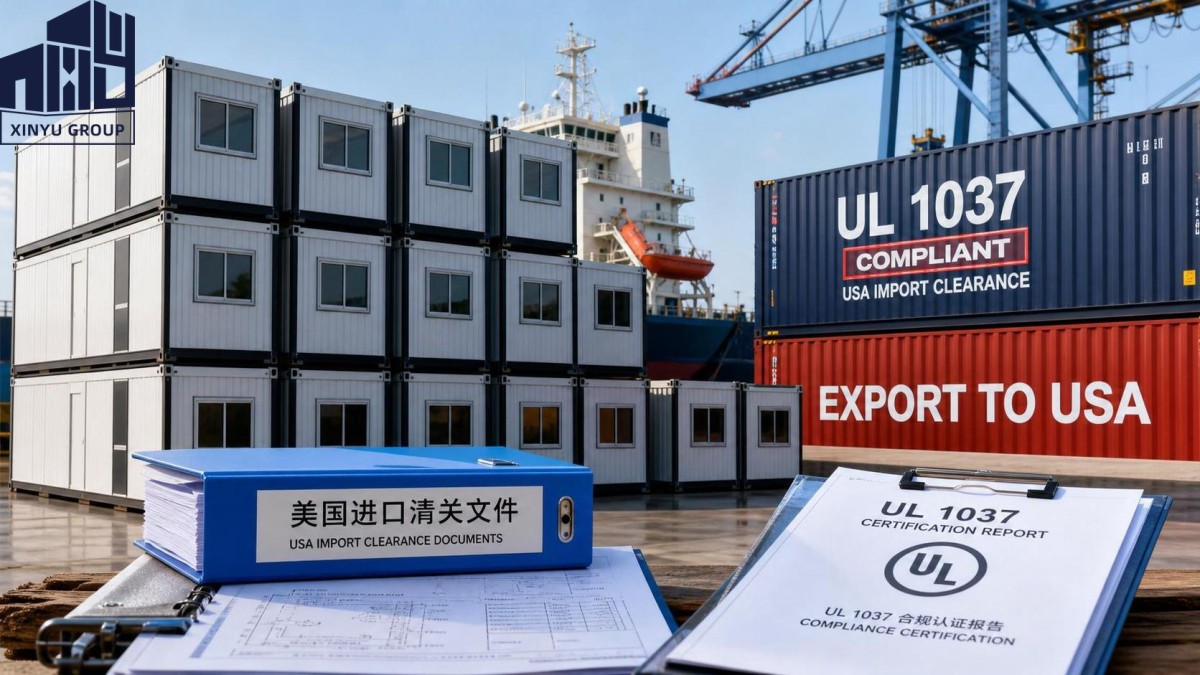
Starting July 1, 2026, U.S. imports of prefabricated structures shipped as modular buildings or container housing face a new customs documentation requirement. Following an emergency notice issued by U.S. Customs and Border Protection (CBP) on June 30, importers must submit a UL 1037 compliance declaration issued by a UL certification body at the time of customs clearance. For Chinese exporters, U.S. buyers, and supply chain service providers handling these shipments, the immediate concern is not only compliance itself, but also the effect on pre-shipment certification timing, documentation readiness, and clearance efficiency, especially because missing declarations may lead to full-container port delays or return shipment.
What the new CBP requirement confirms
According to the provided information, CBP released an emergency notice on June 30, 2026. The notice takes effect on July 1, 2026.
From that date, all prefabricated structural products imported into the United States in the form of modular buildings or container housing must be accompanied at customs clearance by a UL 1037 compliance declaration issued by a UL certification body.
The requirement concerns UL 1037 as the referenced standard for electrical and fire safety in movable buildings. The provided information also states that failure to submit the declaration may result in full-container cargo being held at port or returned.
Where the pressure is likely to appear first
Export-facing shipment planning may tighten
From an industry perspective, direct trading companies exporting container housing or modular prefabricated structures to the United States are likely to feel the impact first. The reason is straightforward: the new requirement is tied directly to customs clearance, which means shipment release is now linked to whether the required declaration is ready in parallel with cargo movement. The business impact is likely to show up in shipment scheduling, document preparation, and coordination between factory, exporter, and consignee.
Manufacturing timelines may be affected before goods leave port
For processing and manufacturing enterprises, the main issue is likely to be the earlier placement of compliance work in the delivery cycle. Analysis shows that when a declaration must be available at clearance, certification-related preparation can no longer be treated as a late-stage paperwork item. What deserves closer attention is whether production and export arrangements still match committed delivery windows once compliance preparation is pulled forward.
Logistics and customs service providers face execution risk
Supply chain service providers, including freight forwarding and customs handling participants, may be affected because the new requirement changes the completeness standard for clearance documents. Their exposure is operational: incomplete or mismatched documentation can translate into port delay risk, handover disruption, and communication pressure among exporter, importer, and service partners. The practical concern is whether document review processes are updated quickly enough for shipments already close to departure or arrival.
U.S.-bound buyers and project-side purchasers may need closer supplier checks
Purchasers sourcing these prefabricated structures for the U.S. market may also be affected indirectly. Observably, when customs release depends on a specific compliance declaration, supplier qualification and document readiness become part of delivery certainty. Buyers therefore need to pay closer attention to whether suppliers can support the required declaration in time, rather than focusing only on product delivery itself.
What companies should check immediately
Whether targeted products fall within the described import form
The first practical point is product scope. Companies shipping prefabricated structural products to the United States in the form described in the notice should review current and pending orders immediately, especially where product classification and shipment form may affect whether the requirement applies in practice.
Whether the declaration can be aligned with clearance timing
The second issue is timing. The provided information makes clear that the declaration must be submitted together with customs clearance. That means exporters, importers, and service partners need to confirm whether internal document flows, supplier preparation, and booking schedules still work under the new timeline.
Whether customer communication needs to be updated now
Another key point is transaction communication. Where cargo is already in production, booked, or close to shipment, companies should review what has been promised to customers regarding dispatch and arrival timing. Analysis shows that the business risk here is not limited to compliance failure; it also includes preventable disputes caused by outdated lead-time expectations.
Whether official wording changes or clarifications follow
Because the requirement was introduced through an emergency notice immediately before implementation, companies should keep watching for any follow-up clarification in official wording, scope interpretation, or execution practice. What deserves closer attention is the difference between the headline rule and how customs review is actually carried out in day-to-day operations.
Why this looks like more than a one-day customs notice
Analysis shows that this development should not be read only as a short-term filing adjustment. The immediate fact is a documentation requirement at customs, but the broader signal is that electrical and fire safety compliance for movable or modular imported structures is being placed closer to the border-control stage. That does not by itself confirm a wider policy shift beyond the provided notice, but it does suggest that market participants should treat compliance readiness as part of shipment planning rather than a secondary administrative step.
It is more appropriate to understand this as an immediate operational change with potential longer-term implications, while still keeping judgment cautious until additional official clarification or related enforcement patterns become visible.
How this update is best understood for now
At this stage, the clearest industry takeaway is practical rather than speculative: for U.S.-bound container housing and modular prefabricated structure shipments, customs documentation now has a more direct impact on delivery reliability. The rule already creates a concrete near-term constraint because missing declarations may trigger port hold or return shipment.
From an industry perspective, this is best understood as an active compliance requirement with immediate execution consequences, and also as a policy signal that merits continued monitoring. It should not be overstated into a broad market conclusion, but it should not be treated as routine paperwork either.
Basis of this article and what still needs verification
This article is based on the user-provided news title, event date, and event summary concerning the CBP emergency notice and the UL 1037 declaration requirement effective July 1, 2026.
For this type of industry update, source categories typically relevant for continued verification include official government notices, company announcements, industry association updates, authoritative media coverage, and standard organization documents. A specific official source link was not provided in the input, so the exact original notice and any later clarification still need ongoing verification.
Items worth tracking next include whether CBP issues further interpretive guidance, whether documentation practice changes at the clearance stage, and whether affected market participants adjust lead times or supplier review procedures in response.
Need Us to
Contact You?
We received your message and will contact you as soon as possible.
Thank you for your visit.