news
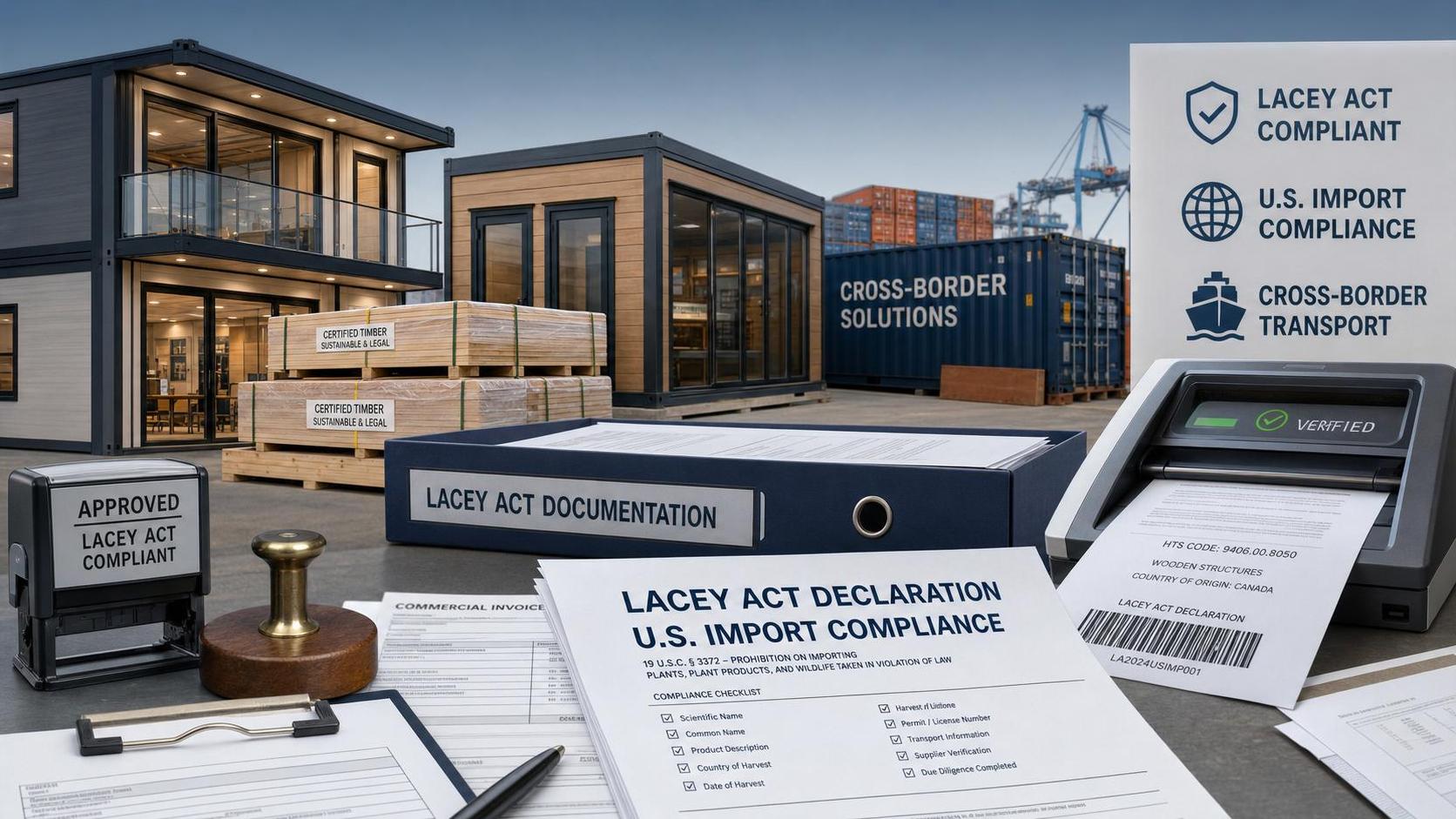
U.S. Customs and Border Protection (CBP) issued an emergency notice on July 10, 2026, stating that from July 15, wood-structured products imported into the United States in the form of modular buildings, movable houses, and container homes must be accompanied by a certified Lacey Act compliance declaration. For exporters serving the U.S. market, especially those shipping from China, this is not just a documentation update. It directly affects customs clearance timing, document preparation, and the reliability of delivery schedules, making it a development that manufacturers, traders, buyers, and supply chain service providers need to follow closely.
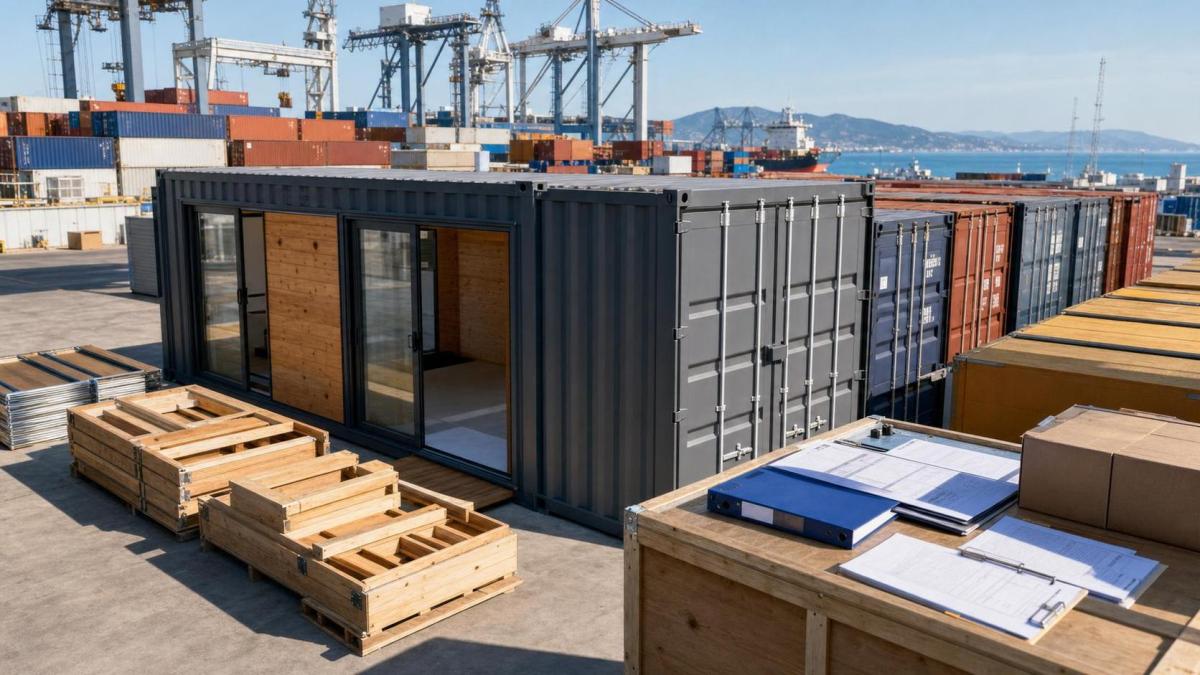
What the new filing requirement covers
Based on the information provided, the CBP notice was released on July 10, 2026 and takes effect on July 15, 2026. The requirement applies to wood-structured products imported into the United States when they are presented as modular buildings, movable houses, or container homes.
The required document is a certified Lacey Act compliance declaration. Its purpose is to show that the wood used in the imported product comes from a lawful source and can be traced.
The same information also indicates that the rule has an immediate effect on customs clearance efficiency and document preparation for Chinese exporters. If the declaration is not submitted, or if the information provided is inaccurate, the shipment may be detained in full, fined, or placed on a blacklist.
Where the pressure will be felt across the trade chain
Exporters face a tighter pre-shipment review cycle
Direct trading companies are likely to feel the impact first because they are responsible for organizing export files and aligning shipment timing with U.S. entry requirements. From an industry perspective, the key pressure point is that customs documentation can no longer be treated as a final-step task if wood content is involved in modular housing or container home products.
What deserves closer attention is whether product descriptions, material records, and compliance files are fully aligned before shipment. Any mismatch between the goods and the declaration could affect release timing.
Manufacturers and sourcing teams will need clearer wood traceability
For processing manufacturers and procurement teams, the issue is not only whether wood is used, but whether the source of that wood can be supported by compliant and traceable records. Analysis shows that the rule brings upstream material management closer to the customs clearance process.
The business effect is likely to appear in supplier qualification checks, internal record collection, and the handoff between procurement and export documentation teams. Companies shipping finished modular structures to the U.S. market will need to pay particular attention to how wood-related information is captured and retained.
Logistics and customs service providers may face higher documentation risk
Supply chain service providers, including freight and customs handling parties, may be affected because incomplete or inconsistent paperwork can delay the entire shipment. Observably, the compliance burden does not stay only with the factory or exporter once the goods enter the cross-border delivery process.
In practice, these service roles will need to monitor whether declarations are complete before customs filing and whether clients understand the new threshold for document accuracy.
Buyers and project-side stakeholders may need to reassess lead times
Purchasers and downstream users of modular buildings, movable houses, and container homes may also be affected through delivery uncertainty. Analysis shows that even where the physical product is unchanged, the import process itself can become slower if document preparation is not ready at the time of shipment.
The point to watch is not only whether a shipment can enter the U.S. market, but whether the expected project timeline still holds once the new declaration requirement is applied.
What companies should monitor right now
Watch for any further official wording or implementation detail
Because the available information centers on an emergency CBP notice and a fast implementation date, companies should closely follow whether there are additional official clarifications on scope, filing expectations, or documentation language. Analysis shows that early notices often create practical questions at the execution stage even when the main requirement is already clear.
Review which product lines fall into the affected category
Businesses should focus on shipments entering the United States as modular buildings, movable houses, or container homes where wood-structured components are involved. The immediate operational question is whether the company has clearly identified affected product categories and separated them from shipments that may not trigger the same documentation requirement.
Check whether supplier records support a certified declaration
The practical issue is not merely obtaining a form, but ensuring that the declaration can be supported by records showing lawful and traceable wood sourcing. From an industry perspective, supplier documentation, internal file consistency, and readiness before booking or customs filing deserve closer attention than broad compliance statements.
Prepare for customer and delivery communication risks
Since the provided information explicitly mentions possible detention, fines, and blacklisting for non-submission or inaccurate information, companies should prepare for customer communication around lead times, document readiness, and shipment risk. This is especially relevant where delivery commitments were set before the new requirement took effect.
Why this looks like more than a short paperwork adjustment
Analysis shows that this development should not be read only as a temporary customs formality. The short implementation gap between the July 10 notice and the July 15 effective date suggests an immediate enforcement focus around import documentation for wood-containing modular and containerized housing products.
At the same time, it is more appropriate to understand this as an active compliance signal rather than a fully settled long-term framework. The confirmed facts show a clear requirement and clear consequences, but they do not by themselves answer every operational question that exporters and service providers may face in execution. That is why continued monitoring remains necessary.
How to read the current signal
At this stage, the most balanced reading is that CBP has moved wood legality and traceability from a background compliance issue into an immediate import gatekeeping issue for affected housing-related products. The direct consequence is practical: documentation quality now has a more visible effect on release timing and shipment risk.
It is more appropriate to understand this as an enforceable near-term change with possible longer-term significance, rather than as a one-day customs event or a fully defined market shift. For industry participants, the priority is to treat the rule as operationally active while continuing to verify how it is applied in practice.
Source basis and points for continued verification
This article is based on the user-provided news title, event date, and event summary. The specific official source link was not provided in the input, so it still needs to be verified on an ongoing basis.
For this type of development, source categories that are commonly relevant include official notices, company announcements, industry association updates, authoritative media coverage, and standards or compliance-related documents. Continued attention should focus on whether CBP releases further clarifications, whether implementation language changes, and how the requirement is applied in actual import filing and customs clearance workflows.
Need Us to
Contact You?
We received your message and will contact you as soon as possible.
Thank you for your visit.