news

Effective July 6, 2026, U.S. Customs and Border Protection has begun requiring importers of container houses with wood components to submit a Lacey Act compliance declaration. For companies involved in modular buildings and movable housing under HS code 8906.90, this is not just a documentation update; it directly affects customs clearance, supplier verification, and coordination between U.S. import channels and Chinese factories. The development deserves close attention because incomplete or inaccurate filings can now escalate into shipment detention, fines, or even an import ban.
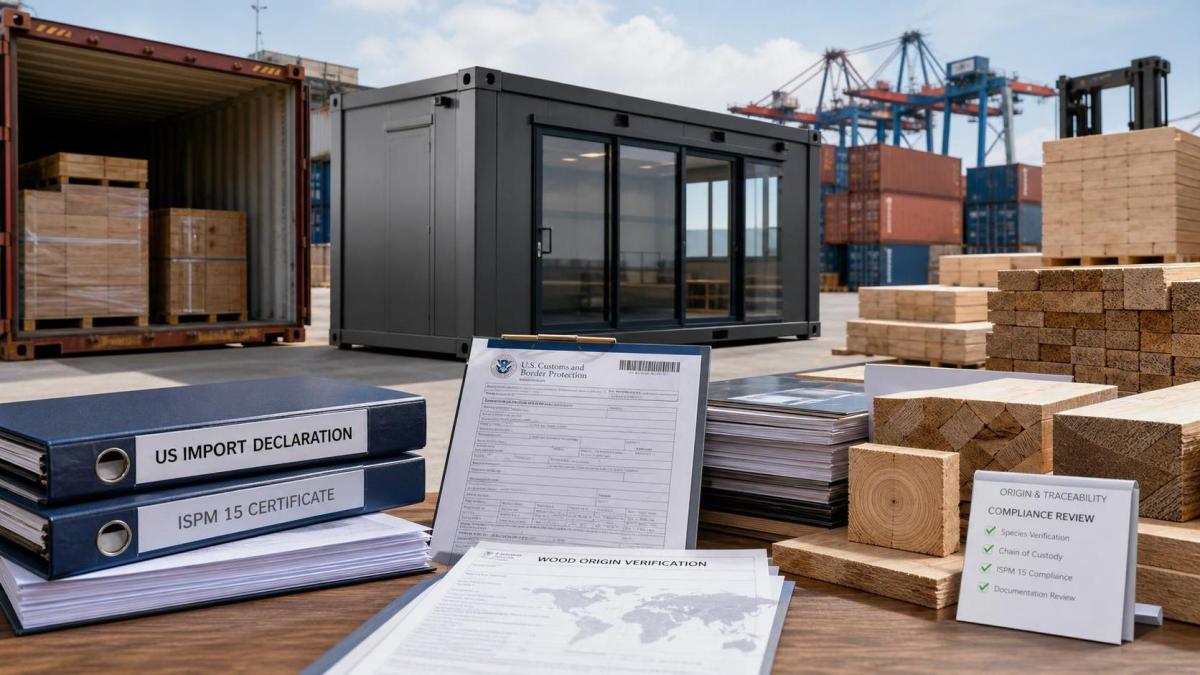
What the new CBP requirement covers
According to the information provided, the requirement took effect on July 6, 2026. CBP now requires all importers of container houses containing wood components to provide a Lacey Act compliance declaration. The declaration must cover the country of origin of the wood, the tree species involved, and proof that the harvesting was legal.
The requirement applies to movable houses and modular building products classified under HS code 8906.90. The same information provided also states that failure to submit the declaration, or submission of false information, can lead to detention of the full shipment, financial penalties, or an import prohibition.
Where the pressure will be felt across the supply chain
Importers and U.S. distribution partners face immediate compliance exposure
From an industry perspective, importers and distribution partners in the U.S. are the first parties likely to feel the operational impact. The reason is straightforward: they are directly exposed at the customs entry stage. The main pressure points are document readiness, declaration accuracy, and the ability to demonstrate that wood-related information can be verified before shipment arrival.
Chinese factories will face tighter documentation demands from buyers
Analysis shows that Chinese manufacturers supplying container houses or modular buildings to the U.S. market may come under stronger requests from customers for upstream material records. The likely impact is concentrated in factory procurement files, bill-of-material review, and handover of supporting documents connected to wood components used in the finished product.
Channel partners and supply chain service providers will need stronger coordination
Observably, channel partners and supply chain service providers may also be affected because customs compliance in this case depends on information moving accurately across multiple parties. What deserves closer attention is whether the commercial side, logistics side, and factory side are working from the same product and sourcing records. Gaps between those records could become a practical risk even before any formal penalty is imposed.
What companies should focus on now
Review which product lines fall within the requirement
Companies should first verify which shipments under HS code 8906.90 include wood components and therefore fall within the new filing requirement. The practical issue is not only product classification, but also whether internal teams have mapped wood-containing configurations clearly enough to prepare the required declaration materials.
Update supplier review procedures without delay
Based on the information provided, U.S. distributors, importers, and channel partners need to update supplier audit procedures immediately. In practical terms, that means checking whether existing suppliers can provide the country of origin, tree species details, and proof of legal harvesting in a form that can be verified and retained.
Build traceable records with manufacturing partners
What deserves closer attention is the need to establish verifiable wood supply chain traceability documents with Chinese factories. This is more than a purchasing formality. If the underlying records cannot be checked across sourcing, production, and export documentation, the declaration may become difficult to support in a customs review.
Prepare for customer and shipment communication risks
Analysis shows that the business issue is not limited to filing. Shipment detention, fines, or import restrictions can also affect delivery schedules, customer communication, and channel commitments. Companies handling U.S.-bound container houses should therefore review what information can be shared quickly with customers and partners if a shipment is questioned during import processing.
Why this reads as more than a routine paperwork change
Observably, this development is best understood as a compliance tightening around wood traceability in container house and modular building imports, rather than as a minor customs form update. The confirmed facts already show direct enforcement consequences for missing or inaccurate information. At the same time, it would be premature to turn this into a broad market forecast. What can be said now is that the rule raises the practical standard for document consistency between importers, distributors, and manufacturers.
How the market should interpret the signal
It is more appropriate to understand this as an immediate operational change with longer-term compliance implications. In the short term, the issue is execution: identifying affected products, collecting the required wood information, and aligning supplier records. In the longer term, the signal points to greater importance for traceable material documentation in cross-border modular building trade. The current information supports a cautious reading: this is already actionable, and it also warrants continued observation.
Basis of this article and what still needs verification
This article is based on the user-provided news title, event date, and event summary. For developments of this kind, relevant source categories typically include official notices, company disclosures, industry association updates, authoritative media coverage, and standard or regulatory documentation. A specific official source link was not provided in the input, so further verification remains necessary. Follow-up attention should focus on any additional official wording, implementation clarification, or changes affecting filing practice for covered HS 8906.90 products.
Need Us to
Contact You?
We received your message and will contact you as soon as possible.
Thank you for your visit.